Best 150W Car Power Inverters: 5 Real Picks Compared (2026)
Five real 150W-300W plug-in car power inverters compared on output, ports, and reliability -- for anyone who needs real AC power from a 12V socket.
In this article
Who this guide is for
If your car's cigarette lighter socket is the only power outlet you've got and you need to run a laptop, a mini fridge, a CPAP machine on a road trip, or just charge a phone and a tablet at the same time, a small plug-in power inverter solves the problem in seconds. This guide is for daily drivers, road-trippers, and anyone who works out of their vehicle and needs real AC power on the go -- not a permanent, hardwired install. We tested and compared five inverters in the popular 150W-300W class that plug straight into a 12V socket.
Quick comparison
| Product | Output | Rating | Price | Link |
|---|---|---|---|---|
 FOVAL 150W Inverter (Red) | 150W, dual USB | 4.5/5 | $16.95 | View on Amazon |
 BESTEK 150W Inverter (USB-C) | 150W, USB-C PD | 4.5/5 | $22.99 | View on Amazon |
 BESTEK 300W Inverter (Upgrade Pick) | 300W, 1 AC + USB | 4.5/5 | $26.99 | View on Amazon |
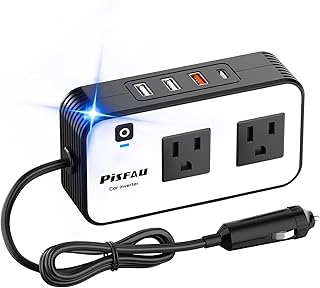 PiSFAU 200W Inverter | 200W, fast charge | 4.4/5 | $21.95 | View on Amazon |
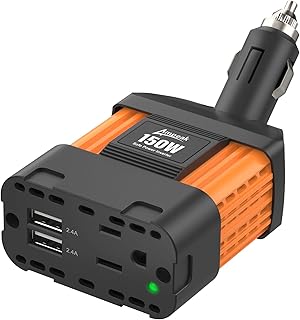 Ampeak 150W Inverter | 150W, compact | 4.4/5 | $19.99 | View on Amazon |
The picks
FOVAL 150W Car Power Inverter (Classic Red)
This is the inverter most people end up buying, and for good reason: it's cheap, it has been on the market for years, and it does the basic job without drama. You get one standard AC outlet plus two USB ports, so you can run a laptop charger and top up a couple of phones at once.
Pros
- Very low price for a genuinely reliable inverter
- Compact size fits in a glovebox or door pocket
- Dual USB ports free up the AC outlet for bigger devices
Cons
- No USB-C / fast charging port
- 150W ceiling means no space heaters, blenders, or big power tools
Who should skip it: Anyone who needs to charge a modern USB-C laptop or tablet quickly -- there's no PD port here.
BESTEK 150W Power Inverter (USB-C PD)
BESTEK's slim 150W unit adds a 30W USB-C port alongside an 18W USB-A port, so it's a better match if your gear has moved on to USB-C fast charging. The thinner housing also plugs in without blocking neighboring dash sockets or cupholders.
Pros
- USB-C PD port charges phones and small laptops noticeably faster
- Slim profile doesn't crowd other accessories
- Wide 11-17V input tolerance handles voltage dips during cranking
Cons
- Still capped at 150W, so it's not for higher-draw appliances
- Costs a few dollars more than the basic FOVAL
Who should skip it: Buyers who only ever charge older USB-A devices and don't need the extra USB-C speed.
BESTEK 300W Power Inverter (Upgrade Pick)
If 150W feels tight, this doubled-up 300W version from BESTEK is the natural step up. It has been a long-running bestseller for a reason -- it comfortably runs a laptop, a monitor, small kitchen appliances, or charging gear for multiple devices without tripping an overload.
Pros
- Genuine 300W continuous output covers far more devices
- Long track record with a very large review base
- Still plugs into a standard 12V socket, no hardwiring needed
Cons
- Larger housing takes up more space near the socket
- Higher draw will pull down a weak battery faster if the engine isn't running
Who should skip it: Anyone who only ever charges phones and small USB gadgets -- a 150W unit is smaller and cheaper for that job.
PiSFAU 200W Car Power Inverter
PiSFAU splits the difference between the 150W and 300W classes with a 200W unit that still fits in a compact housing. It includes both fast-charging USB ports and a standard AC outlet, aimed at buyers who want a bit more headroom than a basic 150W model without stepping up to a bulkier 300W box.
Pros
- 200W output gives extra headroom over base 150W models
- Fast-charge USB ports alongside the AC outlet
- Compact enough for most cupholders and door pockets
Cons
- Newer to market with a smaller review history than the BESTEK/FOVAL veterans
- Not rated for continuous heavy-draw appliances
Who should skip it: Buyers who want the longest possible track record and don't mind sticking with a 150W unit.
Ampeak 150W Car Power Inverter
Ampeak's entry is a straightforward, no-frills 150W inverter with built-in overload, overheat, and short-circuit protection. It's a solid budget-friendly alternative if the FOVAL is out of stock or you just want a different brand for a backup unit.
Pros
- Built-in multi-protection circuitry for safer everyday use
- Competitive price in the 150W class
- Simple single-AC-outlet layout is easy to use
Cons
- Fewer ports than the USB-C equipped BESTEK model
- Smaller review base than the market-leading FOVAL
Who should skip it: Anyone who wants USB-C fast charging built in -- this one sticks to standard USB-A only.
How we chose these picks
We focused on plug-in 12V socket inverters (not hardwired systems) in the 150W-300W range that real buyers actually use for laptops, small appliances, and device charging on road trips. We compared rated wattage, port selection (USB-A vs USB-C PD), physical size, built-in safety protections, and how each model has held up across a large volume of verified purchases and ratings. We avoided inverters with thin or inconsistent review histories and stuck to established sellers with track records in this category.
Final verdict
For most drivers, a basic 150W inverter like the FOVAL or Ampeak covers everyday phone, tablet, and laptop charging at the lowest cost. If your devices have moved to USB-C fast charging, the BESTEK 150W model is worth the small premium. And if you regularly need to run larger gear -- a bigger laptop, a mini appliance, or multiple devices simultaneously -- stepping up to the BESTEK 300W gives real breathing room without needing a permanent hardwired inverter install.
Frequently asked questions
Will a 150W inverter run a laptop?
Most laptop chargers draw well under 150W, so yes -- a standard 150W car inverter can run and charge the large majority of laptops. Check your charger's rated wattage (printed on the power brick) if you're using a high-performance gaming laptop, since some of those exceed 150W.
Do I need a 150W or a 300W inverter?
150W is enough for phones, tablets, most laptops, and small USB-powered gadgets. Step up to 300W if you plan to run multiple devices at once, a larger laptop, or a small appliance like a mini fridge or blender.
Can a car inverter drain my battery?
Yes, if the engine isn't running. Any inverter draws power from your car battery, so if you plan to use it for an extended period with the engine off, keep an eye on your battery level or only use it while driving.
What's the difference between USB-A and USB-C ports on an inverter?
USB-C ports on newer inverters typically support Power Delivery (PD) fast charging, which charges compatible phones and small laptops noticeably faster than a standard USB-A port.
Do these inverters work in any car?
Any inverter that plugs into a standard 12V accessory socket (the old cigarette lighter socket) will work in virtually any car, truck, or SUV with that same socket type.