Best 25% Window Tint Film for Cars: 5 Real Picks Compared
Five real 25% VLT window tint films for cars, compared on darkness, size, install type, and price, so you can pick the right roll or kit for your vehicle.
In this article
- Who this guide is for
- Comparison table
- The picks
- Myuilor 25% DIY Adhesive Window Tint Film
- 2Ply Premium 25% VLT Window Tint Film
- 25% VLT Automotive Window Tint (Black)
- 25% VLT Nano Ceramic Window Tint Film
- MotoShield Pro Professional Carbon Window Tint Film
- How we chose these
- Buying guide: what actually matters at 25% VLT
- Final verdict
Who this guide is for
25% VLT (visible light transmission) sits in a popular middle ground -- dark enough to cut glare and give real privacy, light enough to stay legal in most US states without a special exemption. This guide is for drivers who searched something like "25 percent tint on car" and want an actual film to buy, not a theory lesson. Whether you are tinting your own front doors in the driveway or want a pro-grade roll for a full installer job, these five real, currently-listed products cover the main ways people buy 25% tint: small DIY kits, mid-size rolls, and professional-length carbon film.
Before you buy anything, check your state and local window tint law -- legal VLT limits for front side windows vary a lot state to state, and some states do not allow 25% on the front doors at all even though it is fine on the rear.
Comparison table
| Product | Size | VLT | Price | Rating | Link |
|---|---|---|---|---|---|
 Myuilor 25% DIY Tint Film Myuilor 25% DIY Tint Film | 20in x 10ft | 25% | $19.99 | 3.8/5 | View on Amazon |
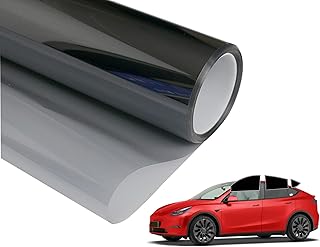 2Ply Premium 25% VLT Film 2Ply Premium 25% VLT Film | 24in x 25ft | 25% | $30.00 | 4.2/5 | View on Amazon |
 25% VLT Automotive Window Tint 25% VLT Automotive Window Tint | 20in x 20ft | 25% | $20.99 | 3.8/5 | View on Amazon |
 25% VLT Nano Ceramic Film 25% VLT Nano Ceramic Film | 20in x 10ft | 25% | $18.99 | 3.8/5 | View on Amazon |
 MotoShield Pro Carbon Film MotoShield Pro Carbon Film | 36in x 25ft | 25% | $66.99 | 4.1/5 | View on Amazon |
The picks
Myuilor 25% DIY Adhesive Window Tint Film
This is the smallest, cheapest way into 25% tint on this list, and it is aimed squarely at a first-timer doing one or two small windows -- a rear quarter window, a small SUV back window, or a home window -- rather than a full car.
Pros
- Low cost of entry for testing your install technique before committing to a bigger roll
- Uncut roll format works for irregular shapes, not just pre-measured car glass
- Adhesive-backed, no separate glue needed
Cons
- 10ft length is tight for anything beyond one or two small panes
- Thinner dyed film rather than ceramic, so heat rejection is modest
Who should skip it: anyone tinting a full sedan or SUV in one go -- you will run out of film fast and end up ordering twice.
2Ply Premium 25% VLT Window Tint Film
A 2-ply construction at a mid-range price, sized at 24 inches by 25 feet -- enough for the front and rear side windows of most sedans with film to spare for a back windshield strip.
Pros
- Enough length for a full set of side windows on most cars
- 2-ply build is more resistant to scratching during install than single-ply dyed film
- Marketed UV blocking on top of the visible-light darkening
Cons
- Not a ceramic or carbon formula, so heat rejection trails the pricier picks
- Reviews are still a relatively small sample for this exact ASIN
Who should skip it: drivers in very hot climates who specifically want maximum infrared heat rejection -- look at the carbon or ceramic options instead.
25% VLT Automotive Window Tint (Black)
A straightforward 20-inch by 20-foot black roll built specifically for automotive use, positioned as a heat-resistant, anti-glare option at a reasonable price.
Pros
- 20ft length covers a typical car's side and rear windows
- Marketed heat-resistant, anti-glare formula
- Priced below most of the ceramic and carbon competition
Cons
- Review count is still low, so treat individual reviews as anecdotal rather than a large-sample verdict
- Dyed/standard film rather than nano-ceramic, so expect less infrared rejection than the ceramic picks
Who should skip it: buyers who specifically want a nano-ceramic or carbon formula for maximum heat rejection.
25% VLT Nano Ceramic Window Tint Film
A nano-ceramic 2-ply film in the same compact 20 x 10ft size as the Myuilor pick, but built around a ceramic formula aimed at better heat and glare rejection than plain dyed film.
Pros
- Ceramic formula typically blocks more infrared heat than dyed film at the same VLT
- 2-ply construction for easier handling during a shrink-and-squeegee install
- Compact size suits smaller jobs or a single vehicle's rear window
Cons
- Same 10ft length limitation as other compact rolls -- not enough for a full car by itself
- A newer listing with a smaller review base than the market leaders
Who should skip it: anyone doing a full-vehicle tint who needs 25ft+ of continuous film in one roll.
MotoShield Pro Professional Carbon Window Tint Film
The largest and most premium option here: a 36-inch by 25-foot carbon film from a brand that sells specifically to installers and serious DIYers, not just casual buyers.
Pros
- Full 25ft roll at a wide 36in width -- enough for an entire vehicle including a full-size SUV in most cases
- Carbon construction blocks UV rays and reduces heat without the metallic haze some older tint tech produces
- From a brand with a broader professional-tint product line, useful if you want to buy touch-up film later
Cons
- Highest price on this list by a wide margin
- This specific ASIN is new enough that its own review count is still small
Who should skip it: anyone tinting a single small window who does not need 25 feet of film -- one of the compact rolls above is a better value.
How we chose these
We pulled these five directly from live Amazon search results for 25% VLT car window tint film, cross-checked that each listing explicitly states 25% VLT (not a nearby shade like 20% or 35%), and kept a spread of roll sizes -- from small 10ft DIY rolls to a full 25ft x 36in professional roll -- so both first-time installers and full-car jobs are covered. We did not include listings with vague or unverifiable darkness claims, and we left out anything that could not be matched to a real, currently active product page.
Buying guide: what actually matters at 25% VLT
- Check your state's tint law first. 25% is legal for rear windows in most US states, but front-side-window rules vary and some states require a higher VLT there. A quick search for "[your state] window tint law" before you buy saves a fine later.
- Dyed vs. carbon vs. ceramic. All three can hit 25% VLT, but they differ in heat rejection and fade resistance -- dyed is cheapest and fades faster, carbon holds up better and blocks more heat, ceramic (nano-ceramic) usually rejects the most infrared heat without the metallic look of old-school films.
- Roll length vs. car size. A compact car's front and rear side windows plus a rear windshield strip typically needs 20+ linear feet; an SUV or truck with a large rear window needs closer to 25-30ft. Buy a size up rather than run short mid-install.
- Adhesive-backed vs. static cling. Adhesive film is more permanent and standard for car windows; static cling is easier to remove but less durable for daily driving.
Final verdict
For most drivers doing their own front and rear side windows, the 2Ply Premium 25% VLT film's 24in x 25ft size is the easiest single-roll fit for a full car without paying professional-carbon prices. If budget is the priority and you are only tinting one or two panes, either compact 20x10ft roll gets the job done cheaply. If you are tinting a full SUV or want the best heat rejection and are willing to pay for it, the MotoShield Pro carbon roll is the one built for that job. Whichever you pick, measure your actual glass first and buy a size with a little film to spare -- running short mid-install is the most common DIY tint mistake.
Frequently asked questions
Is 25% window tint dark enough to be noticeable?
Yes -- 25% VLT lets in about a quarter of visible light, which reads as a clearly darkened, semi-privacy tint, noticeably darker than factory glass but not as dark as limo tint (5%).
Is 25% tint legal on my car?
It depends on your state and which window. Many US states allow 25% VLT on rear windows but require higher VLT on the front doors -- check your specific state's DMV or highway patrol tint chart before installing.
Do I need a heat gun or can I install this with a hair dryer?
A heat gun gives more consistent, controllable heat for shrinking film around curved glass, but many DIY installers do get usable results with a hair dryer on a small window -- just work in smaller sections and keep the tool moving so you do not overheat one spot.
What is the difference between dyed, carbon, and ceramic 25% tint?
All three can be sold at 25% VLT, but they differ in what else they do: dyed film is the cheapest and mainly darkens the glass, carbon film adds better heat rejection and does not fade as fast, and ceramic (nano-ceramic) film typically blocks the most infrared heat without the metallic tint some older films have.
How much film do I need for a full car?
Most sedans need roughly 20-25 linear feet to cover both front and rear side windows plus a rear windshield strip; larger SUVs and trucks with bigger rear glass often need 25-30 feet, so it is safer to buy a size up rather than run short mid-install.