Best AC Manifold Gauge Sets for DIY Air Conditioner Servicing (2026)
Six real manifold gauge sets and vacuum pump kits for checking refrigerant pressure, diagnosing a weak air conditioner, and doing a proper DIY AC recharge.
In this article
- Who this guide is for
- Comparison table
- The picks
- OMT 3-Way AC Manifold Gauge Set
- WISSCOOL HVAC Manifold Gauge Set
- OMT 4-Way Automotive AC Diagnostic Manifold Gauge Set
- VIVOHOME Vacuum Pump and Manifold Gauge Set Combo
- XtremepowerUS 3CFM Vacuum Pump
- VTG VOGTEN Vacuum Pump and Gauge Set
- How we chose
- Final verdict
Who this guide is for
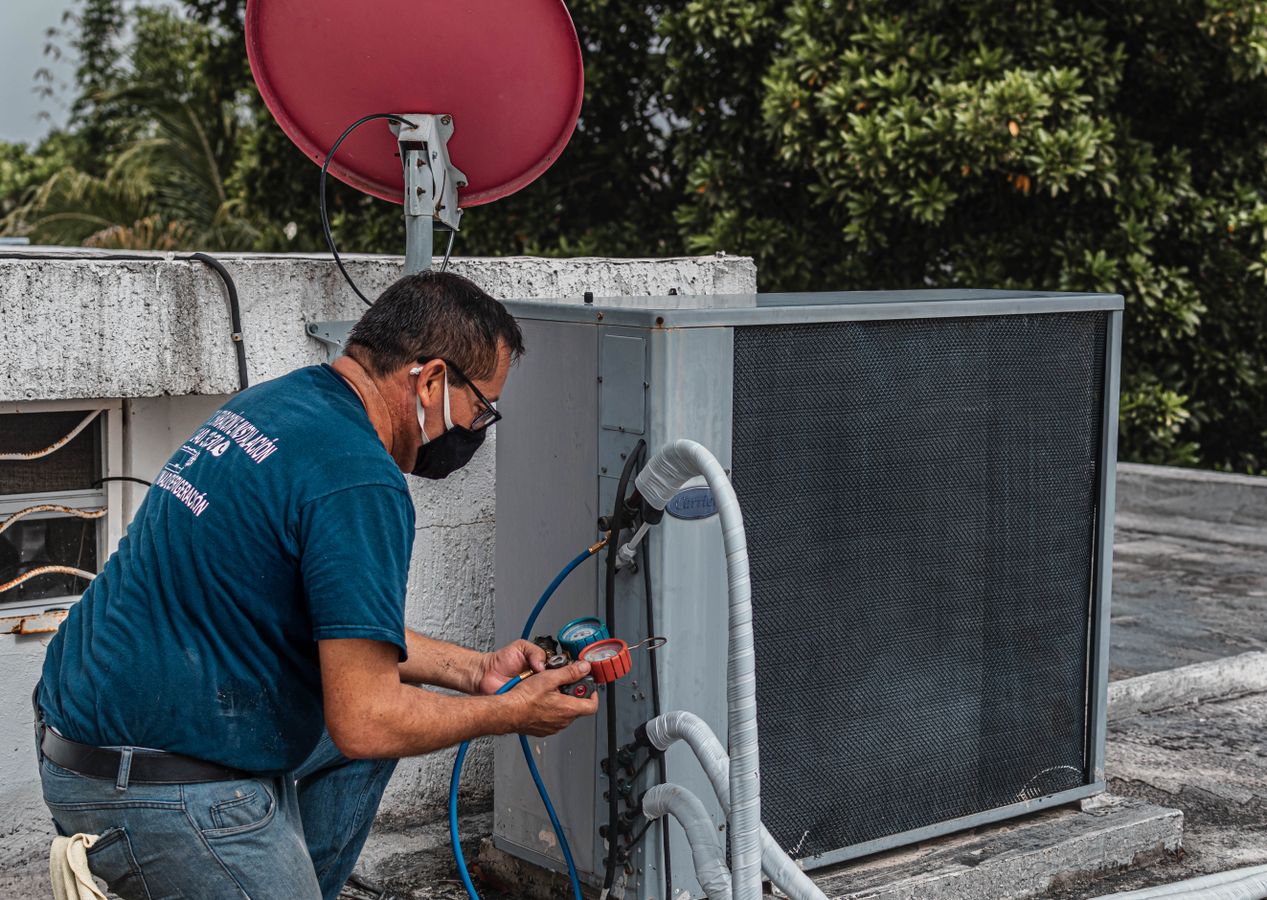
If your air conditioner is blowing warm, cycling oddly, or you just replaced a hose or compressor and need to pull a vacuum before recharging, a manifold gauge set is the one tool that tells you what's actually happening inside the system. This guide is for homeowners, car AC owners, and side-hustle mechanics who want to diagnose refrigerant pressure themselves instead of paying a technician just to hook up gauges and take a reading. It is not a substitute for EPA-regulated refrigerant handling rules where they apply -- treat it as a diagnostic and DIY-recharge tool, not a workaround for certification requirements.
We pulled together six current, well-reviewed options ranging from simple gauge-only sets for quick pressure checks to full vacuum pump and gauge combos for a proper evacuate-and-recharge job.
Comparison table
| Product | Type | Price | Rating |
|---|---|---|---|
 OMT 3-Way Manifold Gauge Set | Gauge only, 3-way | $44.99 | 4.3 |
 WISSCOOL HVAC Manifold Gauge Set | Gauge only, 3-valve | $44.99 | 4.5 |
 OMT 4-Way Diagnostic Gauge Set | Gauge only, 4-way | $79.68 | 4.3 |
 VIVOHOME Vacuum Pump + Gauge Combo | Full recharge kit | $139.99 | 4.5 |
 XtremepowerUS 3CFM Vacuum Pump | Pump only, pairs with any gauge set | $119.95 | 4.4 |
 VTG VOGTEN Vacuum Pump + Gauge Set | Full recharge kit | $99.74 | 4.2 |
See current prices on Amazon Check Price
The picks
OMT 3-Way AC Manifold Gauge Set
This is the simplest, cheapest way to actually see what your low and high side pressures are doing. The 3-way valve body lets you switch between reading, evacuating, and charging without disconnecting hoses, and the case keeps everything organized in a garage or trunk.
Pros: Low cost of entry, clear analog gauges, includes a hard case, compatible with the common older and mid-generation refrigerants. Cons: No vacuum pump included, so it's diagnostic-only or top-off use unless you already own a pump; hose fittings are sized for common refrigerants and won't fit every mini-split without an adapter. Skip it if: you're opening the system for a repair and need to pull a full vacuum -- get a combo kit instead.
WISSCOOL HVAC Manifold Gauge Set
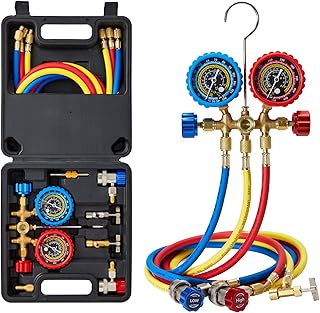
A close alternative to the OMT set at the same price point but with a notably higher average rating. The 3-valve manifold and color-coded hoses make it easy for a first-timer to keep low side, high side, and center port straight.
Pros: Higher user rating than most sets in this price range, color-coded ports reduce mix-up mistakes, decent hose length for working around an outdoor condenser. Cons: Smaller review count than the more established OMT line, so long-term durability data is thinner; still gauge-only. Skip it if: you want the single most reviewed option in this exact price bracket -- the OMT set has far more buyer history.
OMT 4-Way Automotive AC Diagnostic Manifold Gauge Set
Stepping up to a 4-way manifold makes sense if you work on more than one refrigerant type, since the extra port lets you keep a second refrigerant connected without swapping hoses mid-job. It's marketed for automotive AC but the fittings and pressure ranges overlap with plenty of residential mini-split work too.
Pros: Extra port for a second refrigerant type, sturdy braided hoses, includes quick couplers for common refrigerant cans. Cons: Costs almost double the basic 3-way sets for a feature most single-refrigerant users won't need; bulkier case. Skip it if: you only ever service one refrigerant type -- a 3-way set does the same core job for less.
VIVOHOME Vacuum Pump and Manifold Gauge Set Combo
This is the pick for anyone doing a real evacuate-and-recharge job rather than just checking pressure. It bundles a single-stage rotary vane pump with the gauge manifold, a leak detector, and a carry bag, so there's nothing extra to source before starting the job.
Pros: Everything needed for a full vacuum-and-recharge in one box, strong review volume backing up the rating, carry bag keeps the pump and hoses protected between uses. Cons: Heaviest and priciest option here; single-stage pump is adequate for home and car work but not for large commercial systems. Skip it if: you already own a separate vacuum pump -- pairing your existing pump with one of the cheaper gauge-only sets saves money.
XtremepowerUS 3CFM Vacuum Pump
If you already own a gauge set, or want to pick your gauge and pump separately, this pump has by far the largest review base of anything in this list. It's a straightforward single-stage 3CFM unit that pulls a solid vacuum for home and automotive AC work.
Pros: Enormous review count for real-world reliability data, quiet for a rotary vane pump, includes oil for the first fill. Cons: Sold as a pump only -- you'll need a gauge set separately if you don't already have one; 3CFM is on the lighter side for larger central systems. Skip it if: you want a single box with everything included -- go with the VIVOHOME combo instead.
VTG VOGTEN Vacuum Pump and Gauge Set
A budget-friendly combo kit that undercuts the VIVOHOME bundle while still pairing a 4.5 CFM pump with a full manifold gauge set. It's a reasonable middle ground for someone who wants an all-in-one kit without paying combo-kit-premium prices.
Pros: Lower price than most full combo kits, decent 4.5 CFM pump rating on paper, includes gauges and hoses so there's nothing extra to buy. Cons: Lower average rating and smaller review base than the VIVOHOME combo; build quality reports are more mixed at this price. Skip it if: rating and review depth matter more to you than upfront price -- the VIVOHOME combo has a stronger track record.
How we chose
We looked for gauge sets and pumps currently sold on Amazon with a real, sizeable review history and a rating that held up across hundreds or thousands of verified purchases, not just a handful of five-star reviews. We deliberately mixed gauge-only sets, pump-only units, and full combo kits so shoppers at every stage -- from a quick pressure check to a complete DIY recharge -- have a genuine option rather than being pushed toward the most expensive bundle. We avoided anything with vague or unverifiable specs and stuck to listings with clear CFM, valve count, and hose length details.
Final verdict
For most homeowners just trying to figure out why their AC isn't cooling, the OMT or WISSCOOL 3-way gauge set is enough to get a real answer without a big spend. If you're actually opening the system for a repair, the VIVOHOME combo kit is the safer all-in-one choice, and the XtremepowerUS pump is worth considering separately if you already own gauges you're happy with. Whichever you pick, match the fittings and pressure range to your specific refrigerant type before you buy.
Frequently asked questions
Do I need a vacuum pump to recharge an air conditioner, or just a gauge set?
A gauge set alone lets you read pressure and add refrigerant through a can tap, which is fine for topping off a slightly low system. A proper recharge after opening the lines -- replacing a compressor, a hose, or an evaporator -- requires pulling a vacuum first to remove air and moisture, so you need a combo kit with a vacuum pump.
What's the difference between a 2-way and a 3-way or 4-way manifold gauge?
A 2-way set has a low side and a high side gauge with one valve each. A 3-way adds a center port that's easier to switch between vacuum, refrigerant, and recovery without swapping hoses. A 4-way adds a second high-side port, mainly useful on systems using two refrigerant types like R134a and R1234yf.
Are these gauge sets safe to use on a home central air conditioner, or only cars?
Most of the sets here work on both. The gauges and hoses are refrigerant-agnostic as long as the fittings and pressure range match your system. Home central AC and mini-splits typically run R410a or R32, so confirm the coupler size and pressure rating on the box match your unit before buying.
Can a beginner really do this safely without HVAC certification?
Reading pressures and diagnosing a problem is safe for most DIYers. Actually adding or removing refrigerant is regulated in many places and requires an EPA 608 certification in the US for anything beyond small self-sealing cans. Check local rules before you buy refrigerant, not before you buy the gauge set itself.
How much CFM do I need in a vacuum pump for a residential AC?
For most window units, mini-splits, and single-zone residential systems, a 3.5 to 4.5 CFM single-stage pump is plenty and pulls a deep enough vacuum in a reasonable time. Larger central systems or professional work benefit from a higher-CFM dual-stage pump, but that's overkill for occasional home use.