Best AC Stop Leak Sealants: 5 Tested Picks to Plug a Slow Refrigerant Leak
Five real AC stop-leak sealants compared for small refrigerant leaks in home HVAC, mini-split, and automotive A/C systems.

In this article
- Who this guide is for
- Quick comparison
- The picks, reviewed
- Leak Saver Direct Inject AC Leak Sealer
- Nu-Calgon 4050-11 EasySeal Direct Inject-UV Dye Refrigerant Leak Sealant
- BlueDevil Red Angel Automotive A/C Stop Leak & Conditioner
- K-Seal ST5501 Multi-Purpose One Step Coolant Leak Repair
- RectorSeal AC Leak Freeze 45309 Leak Sealant
- How we chose these picks
- Final verdict
Who this guide is for
If your car or home A/C is losing cool air a little more every week, chances are you have a slow refrigerant leak somewhere in the line, coil, or seal. Before booking an expensive service call, a lot of DIYers reach for a stop-leak sealant that gets injected straight into the system to plug small leaks from the inside. This guide is for anyone comparing real stop-leak products for a home HVAC unit, mini-split, or vehicle A/C system and wants to know which ones are actually worth trying before calling a technician.
Quick comparison
| Photo | Product | Price | Rating | Buy |
|---|---|---|---|---|
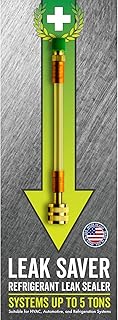 | Leak Saver Direct Inject AC Leak Sealer | $35.95 | 4.2★ | Check Price |
 | Nu-Calgon 4050-11 EasySeal Direct Inject-UV Dye Refrigerant Leak Sealant | $71.00 | 4.4★ | Check Price |
 | BlueDevil Red Angel Automotive A/C Stop Leak & Conditioner | $35.48 | 4.3★ | Check Price |
 | K-Seal ST5501 Multi-Purpose One Step Coolant Leak Repair | $12.21 | 4.3★ | Check Price |
 | RectorSeal AC Leak Freeze 45309 Leak Sealant | $94.41 | 4.0★ | Check Price |
The picks, reviewed
Leak Saver Direct Inject AC Leak Sealer
Pros
- Single-can direct-inject design needs no extra injector tool
- Works across most common HVAC/AC refrigerant types
- Widely used, so plenty of real-world feedback to lean on
Cons
- Best treated as a stop-gap fix, not a substitute for a proper leak repair
- Only rated for smaller systems -- check the ton capacity before buying
Who should skip it: Skip this if you already know the leak is a large split or blown line -- it is meant for small-to-mid pinhole leaks, not structural failures.
Nu-Calgon 4050-11 EasySeal Direct Inject-UV Dye Refrigerant Leak Sealant
Pros
- Adds a UV dye so a follow-up inspection light can pinpoint the exact leak point
- HVAC-industry brand (Nu-Calgon) commonly used by pros
- Higher rated for consistency across batches
Cons
- Noticeably pricier than the single-can consumer options
- Meant to be paired with a UV leak-detection flashlight for full benefit
Who should skip it: Skip it if you just want the cheapest one-and-done can and have no interest in UV leak tracing.
BlueDevil Red Angel Automotive A/C Stop Leak & Conditioner
Pros
- Well-known automotive-AC brand with a long track record
- Doubles as a light system conditioner alongside the sealant
- Straightforward can-and-hose application
Cons
- Formulated primarily with car A/C systems in mind, so read the compatibility notes for home HVAC use
- Not intended for very large leaks
Who should skip it: Skip it if your unit is a home central-air or mini-split system rather than a vehicle A/C -- check compatibility first.
K-Seal ST5501 Multi-Purpose One Step Coolant Leak Repair
Pros
- Extremely high review volume with a strong average rating
- Pour-and-go bottle format, no special tools required
- One of the least expensive options here
Cons
- Designed mainly for engine coolant systems, not refrigerant lines -- confirm it matches your specific repair before buying
- Not a refrigerant-specific sealant like the others on this list
Who should skip it: Skip it if you specifically need a refrigerant-line AC sealant -- this one is built for coolant/radiator leaks, so double-check the product listing matches your repair.
RectorSeal AC Leak Freeze 45309 Leak Sealant
Pros
- Small, precise .5 oz sizing aimed at accurate dosing
- Established HVAC parts brand (RectorSeal)
- Good fit for techs who dose by system size rather than dumping a whole can
Cons
- Highest price per ounce on this list
- Smaller quantity means it may not stretch across multiple systems
Who should skip it: Skip it if you want the most sealant for your money -- the smaller, precisely dosed size costs more per use.
How we chose these picks
We focused on products that are widely stocked on Amazon with a meaningful number of verified buyer ratings, come from brands with an actual track record in refrigerant or coolant sealants (not generic no-name kits), and cover a spread of use cases -- from small home HVAC systems to automotive A/C lines. We also flagged where a product is really built for coolant/radiator leaks versus refrigerant-line leaks, since those two jobs are easy to mix up when shopping by keyword alone.
Final verdict
None of these sealants replace a proper repair on a large or structural leak -- they are aimed at small, slow pinhole leaks that are otherwise hard to justify an expensive service call for. If you want the option to trace the leak first, pick a UV-dye formula. If you are dosing a specific system size precisely, go with the smaller, more concentrated option. And always double-check that the product you choose is actually rated for your refrigerant type and system size before you inject anything.
Frequently asked questions
Will an AC stop-leak sealant fix a big refrigerant leak?
No. These products are designed for small, slow leaks like pinholes or minor seal weeping. A large or structural leak needs an actual repair, not a sealant.
Can I use a coolant stop-leak product in my AC refrigerant line?
Not usually. Coolant (engine/radiator) sealants and refrigerant-line AC sealants are formulated differently. Always check the product listing for your specific system before using it.
What does the UV dye in some sealants actually do?
UV dye mixes into the refrigerant so that, with a UV inspection light, you can later see exactly where the original leak was -- useful for confirming the sealant worked or planning a permanent fix.
Do I need special tools to use a direct-inject AC sealant?
Most direct-inject cans are designed to work with your system's existing service port and don't require extra injector tools, but always follow the specific product's instructions for your refrigerant type.
Is it safe to use stop-leak sealant on a home central air system?
Many sealants are rated for small home HVAC systems, but always confirm the ton/BTU capacity limits and refrigerant compatibility listed on the product before using it, and consider having a technician verify the repair afterward.