Best Books for Learning Mental Math Tricks (2026 Buying Guide, 6 Picks)
The best books for learning mental math tricks, compared on technique, review history, and skill level, from beginner-friendly guides to advanced calculation systems.
In this article
- Who this guide is for
- Top picks at a glance
- How we chose these mental math books
- Mental math book comparison table
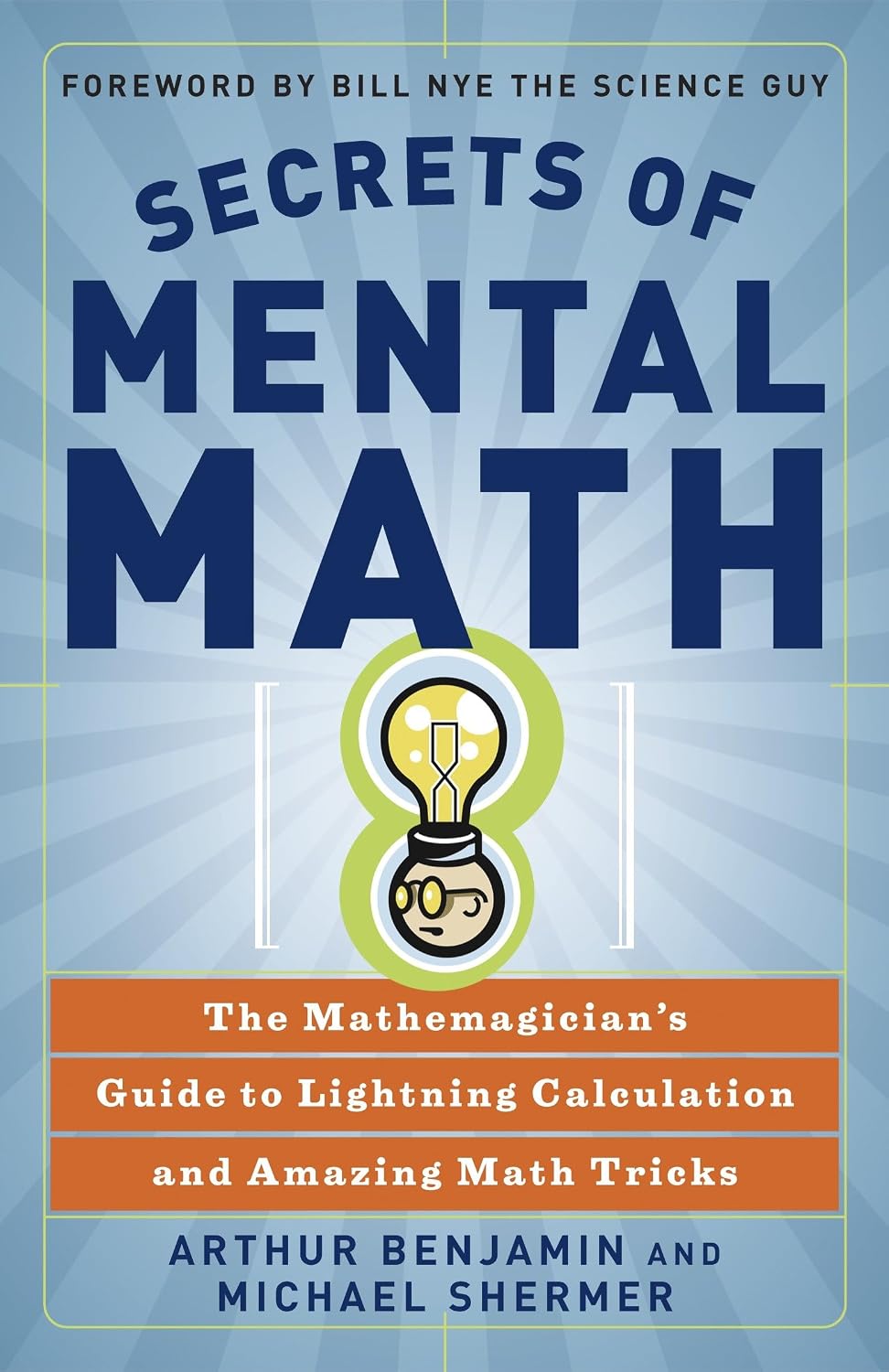
- Secrets of Mental Math: Best Overall
- Speed Mathematics: Best for Beginners
- Think Like A Maths Genius: Best for Advanced Techniques
- Vedic Mathematics Made Easy: Best Value
- 101 Math Puzzles, Riddles, and Brain Teasers for Kids: Best for Kids
- Speed Math for Kids: Best for Young Learners
- Buying guide: what actually matters in a mental math book
- Final verdict
Who this guide is for
This guide is for anyone who wants to get faster at arithmetic without a calculator, whether that means impressing friends with quick multiplication, passing a competitive exam with a mental math section, or just adding up a grocery bill without fumbling for a phone. We looked at the best books for learning mental math tricks currently sold, comparing the techniques they teach (memory pegs, Vedic shortcuts, digit-splitting calculation), how approachable the writing is for a true beginner, and how real buyers rated the material after actually working through it. Six books made the cut, from a foundational classic to lighter options for kids and puzzle fans.
Top picks at a glance
| Award | Product | Best for | |
|---|---|---|---|
| 🏆 Best Overall |  Secrets of Mental Math Secrets of Mental Math | Adults wanting a complete system | Check Price on Amazon |
| 🥈 Best for Beginners |  Speed Mathematics Speed Mathematics | First-time learners wanting simple rules | Check Price on Amazon |
| 🧠 Best for Advanced Techniques |  Think Like A Maths Genius Think Like A Maths Genius | Readers chasing calculator-beating speed | Check Price on Amazon |
| 💰 Best Value |  Vedic Mathematics Made Easy Vedic Mathematics Made Easy | Budget shoppers wanting ancient shortcuts | Check Price on Amazon |
| 👧 Best for Kids |  101 Math Puzzles, Riddles, and Brain Teasers for Kids 101 Math Puzzles, Riddles, and Brain Teasers for Kids | Parents wanting a playful entry point | Check Price on Amazon |
| ⭐ Best for Young Learners |  Speed Math for Kids Speed Math for Kids | Elementary-age children building fluency | Check Price on Amazon |
How we chose these mental math books
- Technique coverage: we prioritized books teaching a genuine calculation system (digit-splitting, Vedic sutras, memory-based multiplication) over books that are just puzzle collections without an underlying method.
- Verified review volume and rating: every pick has real buyer feedback on Amazon, not just marketing copy, so we could gauge whether people actually finish the exercises and retain the tricks.
- Skill level fit: we matched books to the right audience, from total beginners to competitive-exam candidates to young kids, rather than assuming one book suits everyone.
- Practice structure: books with worked examples and drills scored higher than ones that explain a trick once and move on.
- None of these books will make mental math automatic overnight; the tricks only stick with regular practice, ideally a few minutes a day.
Mental math book comparison table
| Book | Core method | Rating | Reviews | Best for |
|---|---|---|---|---|
| Secrets of Mental Math | Digit-splitting arithmetic | 4.6★ | 2,300 | General adult learners |
| Speed Mathematics | Simplified base-10 shortcuts | 4.7★ | 83 | Beginners |
| Think Like A Maths Genius | Advanced calculation feats | 4.4★ | 256 | Advanced practice |
| Vedic Mathematics Made Easy | Vedic sutra shortcuts | 4.3★ | 2,400 | Budget-conscious buyers |
| 101 Math Puzzles, Riddles, and Brain Teasers for Kids | Puzzle-based reasoning | 4.5★ | 125 | Kids ages 10+ |
| Speed Math for Kids | Basic calculation shortcuts | 4.3★ | 93 | Elementary-age kids |
Secrets of Mental Math: Best Overall
Verdict: the most complete, well-tested system for building real mental calculation speed as an adult.
Who it's for: adults and older students who want one book that teaches a full toolkit rather than a handful of party tricks.
Written by mathematician Arthur Benjamin, this book breaks multiplication, division, and squaring down into a digit-splitting method that builds on itself chapter by chapter, so tricks compound instead of sitting in isolation. It has built up over 2,300 ratings on Amazon at a 4.6-star average, which is a large enough sample to trust that the exercises genuinely work when followed in order rather than skimmed. The later chapters on estimating square roots and calendar calculations give it staying power well past the basics.
Pros:
- Builds skills progressively instead of teaching isolated tricks
- Backed by a very large, consistently high review base
- Covers calendar math and roots beyond basic arithmetic
Cons:
- Denser reading than the lighter kid-focused options on this list
- Requires working through exercises in order to get the full benefit
Who should skip it: readers who want something playful for a child should go with Speed Math for Kids instead.
Speed Mathematics: Best for Beginners

Verdict: the gentlest on-ramp for someone who has never tried a mental math shortcut before.
Who it's for: first-time learners who found other mental math books too dense or assumed too much prior comfort with numbers.
Bill Handley's approach strips calculation down to a handful of base-10 shortcuts that don't require memorizing a large system before getting useful results, which is likely why it holds a 4.7-star average from its reviewers. Readers consistently note they could apply at least one trick within the first chapter, which matters more for retention than a comprehensive system that takes weeks to pay off. It won't take a reader as far as some of the more advanced options here, but it earns trust fast.
Pros:
- Very high 4.7-star average rating
- Usable tricks from the very first chapter
- Low barrier to entry for math-anxious readers
Cons:
- Smaller review sample than some other picks
- Less depth than Secrets of Mental Math for advanced calculations
Who should skip it: readers who already know basic tricks and want a harder challenge should look at Think Like A Maths Genius instead.
Think Like A Maths Genius: Best for Advanced Techniques

Verdict: the pick for readers who have the basics down and want calculator-beating speed.
Who it's for: people who already know a few mental math shortcuts and want to push into faster, more impressive calculations.
Co-written with Arthur Benjamin, this book leans further into the performance side of mental calculation, including squaring large numbers and multiplying multi-digit figures rapidly, backed by 256 reviews averaging 4.4 stars. It assumes the reader already has some number comfort, so it moves faster than a true beginner's guide, but that pace is exactly what makes it satisfying for someone who has outgrown the basics.
Pros:
- Covers genuinely advanced calculation feats
- Strong 4.4-star average across a solid review base
- Good next step after a beginner-level book
Cons:
- Not ideal as a first mental math book
- Some techniques take real practice to execute at speed
Who should skip it: total beginners should start with Speed Mathematics first and come back to this one later.
Vedic Mathematics Made Easy: Best Value
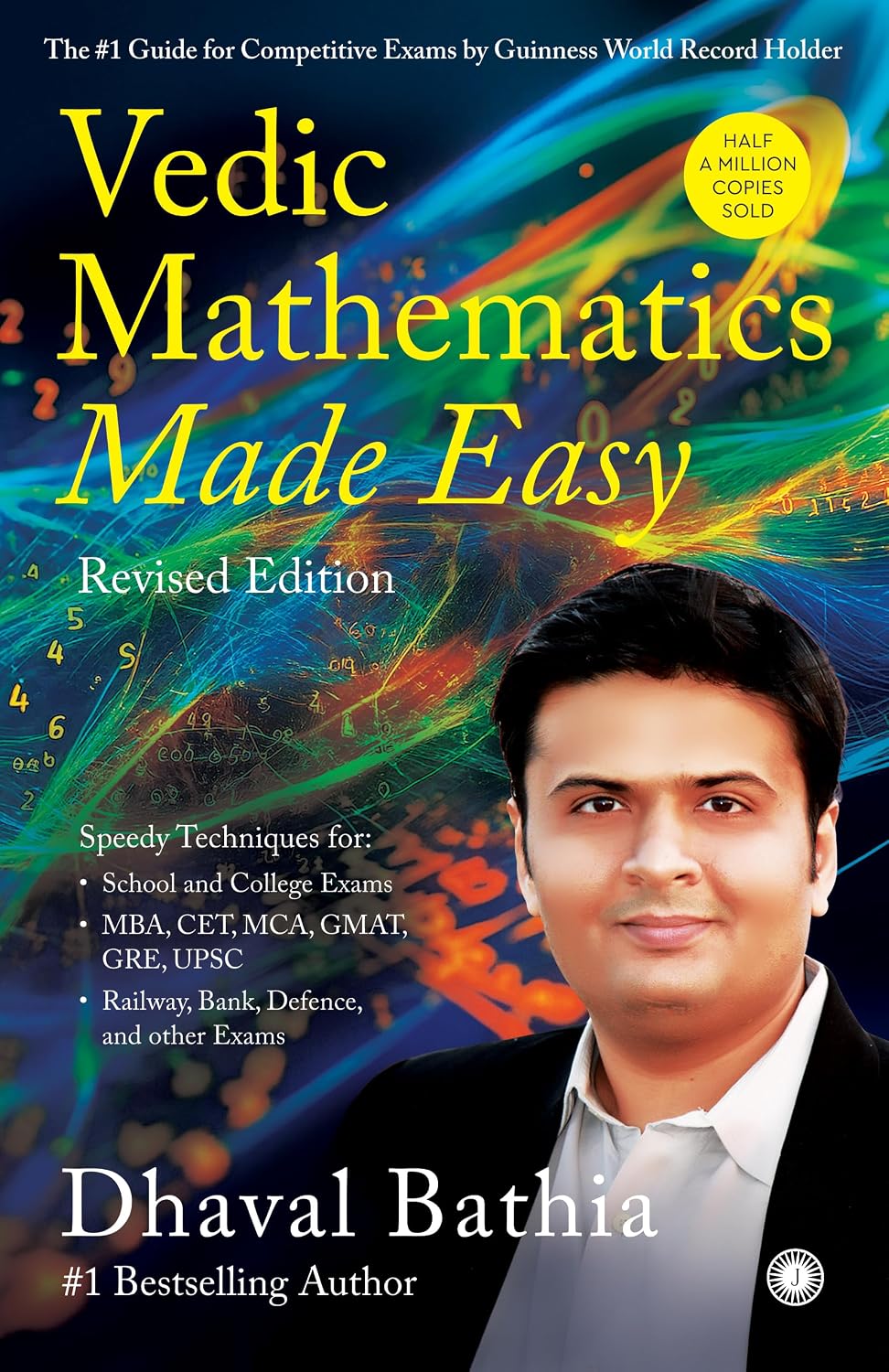
Verdict: a huge amount of proven technique for a low price.
Who it's for: budget-conscious buyers who want ancient, battle-tested shortcuts without paying for a premium hardcover system.
Based on traditional Vedic sutras, this book teaches a set of shortcuts for multiplication, division, and squaring that have circulated for decades among competitive exam candidates, and it shows in the review count: over 2,400 ratings at a 4.3-star average, one of the largest samples on this list. At its price point it delivers a comparable breadth of technique to books costing considerably more.
Pros:
- Large 2,400+ review base at a strong 4.3-star average
- Low price relative to the amount of material covered
- Techniques are well-established, not newly invented
Cons:
- Formatting and translation quality vary by printing
- Some sutras take more practice to internalize than Western-style tricks
Who should skip it: readers who prefer a more polished, Western-style presentation should choose Secrets of Mental Math instead.
101 Math Puzzles, Riddles, and Brain Teasers for Kids: Best for Kids

Verdict: the most engaging option for kids who need reasoning practice framed as fun, not homework.
Who it's for: parents of kids around age 10 and up who want to build number sense through puzzles rather than a formal system.
This collection holds a 4.5-star average across 125 reviews, with parents noting kids returned to it voluntarily because the puzzles read as games rather than drills. It doesn't teach a single unified calculation method the way the adult-focused picks do, but it builds the underlying number flexibility that makes learning formal mental math tricks easier later.
Pros:
- Strong 4.5-star rating from parent reviewers
- Framed as play, which helps with reluctant learners
- Builds number sense that supports later mental math learning
Cons:
- No single unified calculation system like the adult books here
- Best suited to a fairly narrow age range
Who should skip it: parents of younger elementary kids should pick Speed Math for Kids instead.
Speed Math for Kids: Best for Young Learners

Verdict: a straightforward, age-appropriate introduction to calculation shortcuts for elementary-age children.
Who it's for: parents of younger kids who want a gentle first exposure to speed calculation, not puzzle books or advanced systems.
Aimed squarely at basic arithmetic (addition, subtraction, simple multiplication tricks), this book holds a 4.3-star average from 93 reviewers who generally describe it as approachable homework support rather than a standalone curriculum. It's deliberately narrower in scope than the adult books on this list, which is exactly what makes it usable for a child working through it independently or with light parent guidance.
Pros:
- Age-appropriate pacing for elementary students
- Solid 4.3-star rating from parent and teacher reviewers
- Works well alongside regular school math homework
Cons:
- Too basic for older kids or teens
- Doesn't extend into the more advanced tricks adult books cover
Who should skip it: older kids or teens ready for real technique should go with 101 Math Puzzles, Riddles, and Brain Teasers for Kids or, once older, Secrets of Mental Math.
Buying guide: what actually matters in a mental math book
Does it teach a system, or just tricks? A good mental math book builds one coherent method (like digit-splitting or Vedic sutras) that scales to bigger numbers, rather than a disconnected list of one-off shortcuts that only work on specific problem types.
Is the pacing right for the reader's current level? A book that assumes too much comfort with numbers will frustrate a true beginner, while a book that's too basic will bore someone who already knows a few tricks. Matching the book to the reader's starting point matters more than picking the "best" book in the abstract.
Are there enough worked examples and drills? Reading about a trick once rarely makes it stick. Books with structured practice problems, ideally with answers to self-check, produce better retention than ones that explain a concept and move on.
Does the review history reflect real use? A large volume of consistent ratings is a better signal than a handful of five-star reviews, since it suggests a broad range of readers actually worked through the material and found it useful, not just liked the concept.
How much daily practice does it realistically require? Mental math tricks only become fast and automatic with repetition. A book that's honest about needing daily practice tends to produce better long-term results than one that implies instant fluency.
Final verdict
For most readers, Secrets of Mental Math is the strongest overall pick thanks to its complete, progressively structured system and a very large base of consistently high ratings. For someone who wants the gentlest possible starting point before tackling a fuller system, Speed Mathematics is the better first purchase, with a 4.7-star average and tricks usable from the first chapter.
Frequently asked questions
What is the best book for learning mental math tricks as an adult?
Secrets of Mental Math by Arthur Benjamin is the strongest overall pick for adults. It teaches a complete digit-splitting system that builds progressively, and it holds a 4.6-star average across more than 2,300 reviews.
Can a complete beginner learn mental math tricks from a book?
Yes. Speed Mathematics by Bill Handley is built specifically for beginners, using simplified base-10 shortcuts that readers can apply within the first chapter, and it holds a 4.7-star average rating.
What is Vedic mathematics and is it worth learning?
Vedic mathematics is a system of calculation shortcuts based on traditional Indian sutras, covering multiplication, division, and squaring. Vedic Mathematics Made Easy is a strong, affordable option with over 2,400 reviews at a 4.3-star average.
What is a good mental math book for kids?
Speed Math for Kids suits elementary-age children just starting out with basic calculation shortcuts, while 101 Math Puzzles, Riddles, and Brain Teasers for Kids works well for older kids around age 10 and up who enjoy a puzzle-based approach.
How long does it take to get good at mental math using these books?
Most readers need a few weeks of regular, short practice sessions to internalize the tricks well enough to use them quickly. None of these books make mental math instant; consistent daily practice is what makes the techniques stick.
Do I need to be good at math already to use these books?
No. Books like Speed Mathematics and Speed Math for Kids are specifically designed for readers with no prior background in mental calculation, while more advanced picks like Think Like A Maths Genius are better suited to readers who already know some basic tricks.