Best Car AC Leak Sealants: 6 Real Picks Compared
Six direct-inject AC leak sealants compared for drivers dealing with a slow refrigerant leak before booking a shop visit.
In this article
- Who this guide is for
- Comparison table
- The picks, reviewed
- Leak Saver Direct Inject AC Leak Sealer
- Leak Saver Direct Inject Ultimate 3-in-1
- BlueDevil Red Angel Automotive A/C Stop Leak & Conditioner
- Leak Saver Direct Inject UV Refrigerant Leak Sealer
- Nu-Calgon EasySeal Direct Inject-UV Dye Refrigerant Leak Sealant
- ComStar A/C Zero Leak Fluorescent Yellow Leak Sealer
- How we chose these AC leak sealants
- Buying guide: what to check before you buy
- Final verdict
Who this guide is for
If your car's AC is blowing warm, or you've noticed the cold air fading a little more each season, a slow refrigerant leak is usually the cause. Before you book a shop visit for a full diagnostic and repair, a direct-inject AC leak sealant is the cheapest thing worth trying -- it's a DIY can or syringe that seals small leaks in hoses, O-rings, and seals from the inside, often restoring cooling in under an hour. This guide is for drivers who want to try that fix themselves before paying for a professional recharge-and-diagnose visit, not for anyone dealing with a fully empty system, a snapped line, or a failed compressor -- those need a real repair, not a sealant.
Comparison table
| Product | Price | Rating | Buy |
|---|---|---|---|
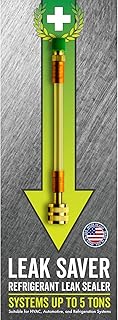 Leak Saver Direct Inject AC Leak Sealer | $35.95 | 4.2★ | Check Price |
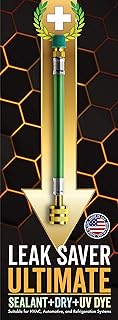 Leak Saver Direct Inject Ultimate 3-in-1 | $46.95 | 4.3★ | Check Price |
 BlueDevil Red Angel Automotive A/C Stop Leak & Conditioner | $33.33 | 4.3★ | Check Price |
 Leak Saver Direct Inject UV Refrigerant Leak Sealer | $36.95 | 4.2★ | Check Price |
 Nu-Calgon EasySeal Direct Inject-UV Dye Refrigerant Leak Sealant | $71.00 | 4.4★ | Check Price |
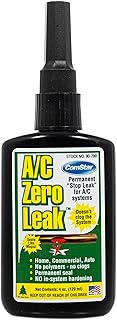 ComStar A/C Zero Leak Fluorescent Yellow Leak Sealer | $30.98 | 4.1★ | Check Price |
The picks, reviewed
Leak Saver Direct Inject AC Leak Sealer
A straightforward direct-inject sealer built for most automotive and HVAC AC systems up to 5 tons, and the best-reviewed single unit in this roundup.
Pros
- Works across most refrigerant types without a special kit
- Huge review base with a consistently solid rating
- Simple screw-on canister, no special tools needed
Cons
- No UV dye included, so you can't visually trace the leak afterward
- Best for small-to-moderate leaks, not a cracked line or failed compressor
Who should skip it: Skip it if you want to actually see where the leak is after treatment -- go with a UV-dye version instead.
Leak Saver Direct Inject Ultimate 3-in-1
The step-up pick from the same brand, adding UV dye and a moisture remover to the base sealant formula for a more complete one-shot treatment.
Pros
- UV dye built in, so a cheap UV flashlight will show the exact leak point
- Moisture remover helps protect the system from internal corrosion
- Carries an "Overall Pick" badge and a strong review average
Cons
- Costs noticeably more than the basic version
- Still a stopgap, not a substitute for replacing a badly corroded line or O-ring
Who should skip it: Skip it if budget is the only factor and you don't own or want to buy a UV light.
BlueDevil Red Angel Automotive A/C Stop Leak & Conditioner
A well-known name in the leak-sealer space, this 2 oz bottle doubles as a system conditioner while it seals small leaks in hoses, O-rings, and seals.
Pros
- From an established, widely stocked automotive brand
- Conditions rubber seals and O-rings as it seals
- Small bottle size keeps the price down
Cons
- 2 oz is only enough for a single small/mid-size system
- No UV dye included
Who should skip it: Skip it if your system needs a larger dose -- check your AC's refrigerant capacity first.
Leak Saver Direct Inject UV Refrigerant Leak Sealer
Same trusted direct-inject format as the top pick, but with UV dye baked in from the start so you get leak-detection and sealing in a single application.
Pros
- UV dye included at a price close to the non-dye version
- Compatible with all common refrigerants
- Large, established review history
Cons
- Requires a UV flashlight (sold separately) to actually see the dye trace
- Not intended for large, active leaks -- those need a proper repair
Who should skip it: Skip it if you already own a version of the non-UV sealer and don't need the dye.
Nu-Calgon EasySeal Direct Inject-UV Dye Refrigerant Leak Sealant
A trade-grade sealant from Nu-Calgon, a brand more commonly sold to HVAC and automotive shops, sized to treat larger 2-7.5 ton systems in one shot.
Pros
- Highest average rating in this list
- Built for bigger systems, so there's margin if your AC runs a larger charge
- UV dye included for leak tracing
Cons
- Most expensive pick here by a wide margin
- Overkill capacity-wise for a typical passenger car
Who should skip it: Skip it for a standard car or small SUV -- it's sized (and priced) for bigger systems.
ComStar A/C Zero Leak Fluorescent Yellow Leak Sealer
A budget-friendly 4 oz fluorescent-dye sealer aimed at HVAC and automotive AC systems, useful as a lower-cost entry point with built-in leak tracing.
Pros
- Lowest price in this roundup among the UV/fluorescent options
- 4 oz size gives a bit more volume than some 2 oz competitors
- Fluorescent yellow dye works with standard UV inspection lights
Cons
- Smallest review count here, so there's less long-term feedback to go on
- Slightly lower average rating than the pricier picks
Who should skip it: Skip it if you specifically want the most-reviewed, most-proven option -- go with the top pick instead.
How we chose these AC leak sealants
We focused on direct-inject sealants sold specifically for automotive and light HVAC use, since those are formulated to be safe for R-134a and R-1234yf systems and common rubber/metal seals. We prioritized products with a meaningful volume of real buyer reviews, compared per-unit pricing against system size, and noted which formulas include UV dye (useful if you want to actually trace where the leak is afterward) versus dye-free versions (fine if you just want the seal). We did not include products with very thin review histories or vague, unverifiable claims.
Buying guide: what to check before you buy
- Know your refrigerant type. Most cars built after 2021 use R-1234yf, not the older R-134a -- check your under-hood sticker before ordering, since not every sealant is compatible with both.
- Match the size to your system. A 2 oz bottle is fine for most sedans and small SUVs; larger trucks, vans, and multi-zone systems may need a bigger dose like the Nu-Calgon pick.
- Decide if you want UV dye. If you plan to trace the leak visually afterward with a UV light, pick a dye-included formula. If you just want the leak sealed, a dye-free version is usually a few dollars cheaper.
- Understand the limits. These products are made for small, slow leaks in hoses, seals, and O-rings -- not for a physically cracked line, a punctured condenser, or a failed compressor seal. If the system won't hold any charge at all, or you can visibly see refrigerant oil pooling under the car, skip the sealant and get it inspected.
Final verdict
For most drivers dealing with a slow-fading AC, the Leak Saver Direct Inject AC Leak Sealer is the safest starting point -- it's the most-reviewed option here with a solid track record across a wide range of systems. If you also want to see exactly where the leak was afterward, step up to the UV-dye version of the same product or the Ultimate 3-in-1. Just go in with realistic expectations: this is a well-proven stopgap for small leaks, not a replacement for a real repair on a severely damaged system.
Frequently asked questions
Will an AC leak sealant work on any car?
Most direct-inject sealants are formulated for common automotive refrigerants, but always check whether your car uses R-134a or R-1234yf and confirm the product you're buying is rated for it -- it's usually printed right on the label.
How long does a leak sealant fix last?
It varies by leak size and location, but many drivers report the seal holding for a year or more on small leaks in hoses and O-rings. Larger or actively worsening leaks may need a repeat treatment or a proper mechanical repair.
Can I use a leak sealant if my AC has no refrigerant left?
Most direct-inject sealants are designed to be added along with a refrigerant recharge, not injected into a completely empty system on their own -- check the product instructions, since some kits include or require a charging port and gauge.
Is UV dye necessary?
No -- UV dye is only useful if you want to visually locate the leak afterward with a UV flashlight. If you're just trying to stop the leak and restore cooling, a dye-free sealant works the same way.
Can a leak sealant damage my AC compressor?
Reputable direct-inject sealants marketed for automotive use are formulated to be compressor-safe, but using an incompatible or off-brand product, or overdosing the system, can cause clogging. Stick to the manufacturer's recommended dose for your system size.