
Best Espresso Machine for Home? 6 Options Compared
Six top espresso machines for home use compared by pump pressure, milk system, build quality, and verified Amazon reviews for the best overall and splurge picks.
In this article
- Who this guide is for
- Top picks at a glance
- How we chose these espresso machines
- Espresso machine comparison table
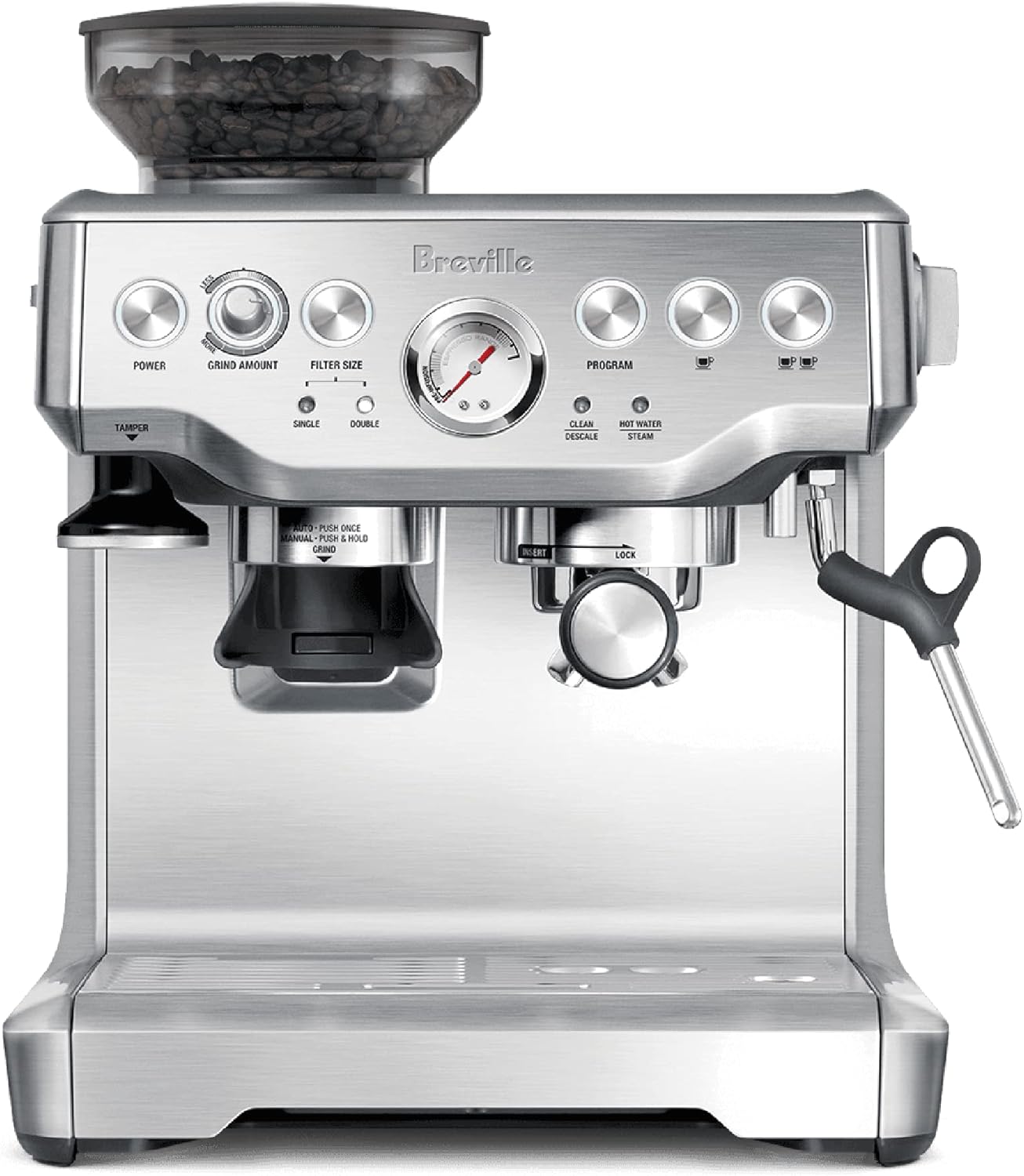
- Breville Barista Express BES870XL: Best Overall
- Casabrews 3700 Essential: Best Budget
- De'Longhi La Specialista Arte Evo: Best Splurge
- Breville Bambino Plus BES500BSS: Best Compact
- Gaggia Classic Evo Pro: Best for Manual Control
- Nespresso Vertuo Plus Deluxe: Best Pod Machine
- Buying guide: what actually matters in an espresso machine
- Final verdict
Who this guide is for
If you're tired of $6 lattes and want café-quality espresso without leaving the kitchen, this guide is for you. We compared the best espresso machines for home currently available on Amazon (evaluating pump pressure, milk-frothing quality, build materials, and real verified-buyer feedback) to find six that are actually worth the counter space. This isn't a list of every machine Amazon sells; it's six picks covering different budgets and skill levels, from a fully manual lever machine to a one-button pod system. If you want real trade-offs instead of vague "barista-quality" marketing copy, keep reading.
Top picks at a glance
| Award | Product | Best for | |
|---|---|---|---|
| 🏆 Best Overall |  Breville Barista Express BES870XL Breville Barista Express BES870XL | Built-in grinder, all-around performance | Check Price on Amazon |
| 💰 Best Budget |  Casabrews 3700 Essential Casabrews 3700 Essential | Tight budgets, first-time buyers | Check Price on Amazon |
| ✨ Best Splurge |  De'Longhi La Specialista Arte Evo De'Longhi La Specialista Arte Evo | All-in-one grinder + frother, serious home baristas | Check Price on Amazon |
| 🧱 Best Compact |  Breville Bambino Plus BES500BSS Breville Bambino Plus BES500BSS | Small kitchens, fast warm-up | Check Price on Amazon |
| ⚙️ Best for Manual Control |  Gaggia Classic Evo Pro Gaggia Classic Evo Pro | Hands-on brewers who want a real 58mm portafilter | Check Price on Amazon |
| ☕ Best Pod Machine |  Nespresso Vertuo Plus Deluxe Nespresso Vertuo Plus Deluxe | Zero learning curve, one-button brewing | Check Price on Amazon |
How we chose these espresso machines
We started with a shortlist of the highest-volume espresso machines sold on Amazon across every price tier, then narrowed it down using four criteria:
- Pump pressure and brewing consistency. We only kept machines with a genuine 15–20 bar Italian pump capable of producing real crema, not novelty "espresso-style" drip machines wearing the espresso label.
- Milk system quality. Steam wand output, frothing speed, and whether the system is manual, semi-automatic, or fully automatic all factor heavily into whether a machine can actually make a decent cappuccino, not just a shot of espresso.
- Build materials and grinder integration. We favored metal boilers and portafilters over plastic where possible, and separately assessed whether a built-in grinder actually improves the workflow or just adds a point of failure.
- Verified buyer feedback. We cross-referenced tens of thousands of verified Amazon reviews for longevity complaints, descaling frequency, and how machines perform after 6+ months of daily use, not just out-of-box impressions.
None of these machines make good espresso with stale, pre-ground beans, freshly ground, properly dosed coffee matters more than the machine underneath it.
Espresso machine comparison table
| Product | Key Spec | Rating | Reviews | Grinder | |
|---|---|---|---|---|---|
| Breville Barista Express | 15-bar pump, steel conical burr | 4.4★ | 27,800 | Built-in | Check Price on Amazon |
| Casabrews 3700 Essential | 20-bar pump, steam wand | 4.3★ | 3,600 | None | Check Price on Amazon |
| De'Longhi La Specialista Arte Evo | 15-bar pump, integrated grinder + frother | 4.2★ | 930 | Built-in | Check Price on Amazon |
| Breville Bambino Plus | 15-bar pump, auto steam wand | 4.1★ | 2,400 | None | Check Price on Amazon |
| Gaggia Classic Evo Pro | 15-bar pump, 58mm commercial portafilter | 4.4★ | 3,100 | None | Check Price on Amazon |
| Nespresso Vertuo Plus Deluxe | Centrifusion pod system, Aeroccino3 | 4.6★ | 8,400 | N/A (pods) | Check Price on Amazon |
Breville Barista Express BES870XL: Best Overall
Verdict: the machine that best balances an integrated grinder, a real steam wand, and genuine longevity, the reason it's the best-selling espresso machine on Amazon by a wide margin.
Who it's for: anyone who wants freshly ground shots without buying a separate grinder, and who's willing to learn basic dosing and tamping.
The Barista Express pairs a 15-bar Italian pump with a built-in stainless steel conical burr grinder, so beans go from hopper to portafilter in one motion instead of needing a separate grinder on the counter. With over 27,800 verified ratings averaging 4.4 stars (the largest review base of any machine on this list by a wide margin) it's clearly the most battle-tested option here. The manual steam wand takes a session or two to get used to, but produces genuinely good microfoam once dialed in, and the digital temperature control (PID) keeps shot temperature consistent, which matters more than most beginners realize for avoiding sour or burnt extractions.
Pros:
- Built-in conical burr grinder saves counter space and a separate purchase
- Massive verified review base (27,800+) at 4.4 stars, the most-trusted pick here
- Digital PID temperature control for consistent shots
Cons:
- Learning curve on grind size, dose, and tamp before shots taste right
- Plastic components in the grinder hopper feel less premium than the metal body
Who should skip it: if you already own a separate grinder or want a fully manual lever experience, the Gaggia Classic Evo Pro below is a better fit.
Casabrews 3700 Essential: Best Budget

Verdict: proof that a genuinely capable 20-bar espresso machine doesn't require spending $500, just don't expect a built-in grinder or app connectivity.
Who it's for: first-time buyers testing whether they'll actually use an espresso machine daily, or anyone furnishing a second kitchen or dorm on a tight budget.
The 3700 Essential runs a 20-bar Italian pump (technically higher pressure than several machines twice its price) paired with a manual steam wand and a 43.9oz removable water tank that's large enough to avoid constant refilling. With 3,600 verified ratings averaging 4.3 stars and "3K+ bought in past month" on Amazon, it's clearly resonating with budget-conscious buyers who don't want to compromise on basic espresso quality. The stainless steel body feels sturdier than the price suggests, though the steam wand output is noticeably less powerful than the Breville machines above it on this list.
Pros:
- Real 20-bar Italian pump at a fraction of the price of premium machines
- Large 43.9oz removable water tank
- Sturdy stainless steel build for the price point
Cons:
- Steam wand produces thinner microfoam than pricier machines
- No built-in grinder, you'll need a separate one for fresh grounds
Who should skip it: if you want a built-in grinder or plan to make lattes and cappuccinos daily, the Breville Bambino Plus or Barista Express will give noticeably better milk texture.
De'Longhi La Specialista Arte Evo: Best Splurge
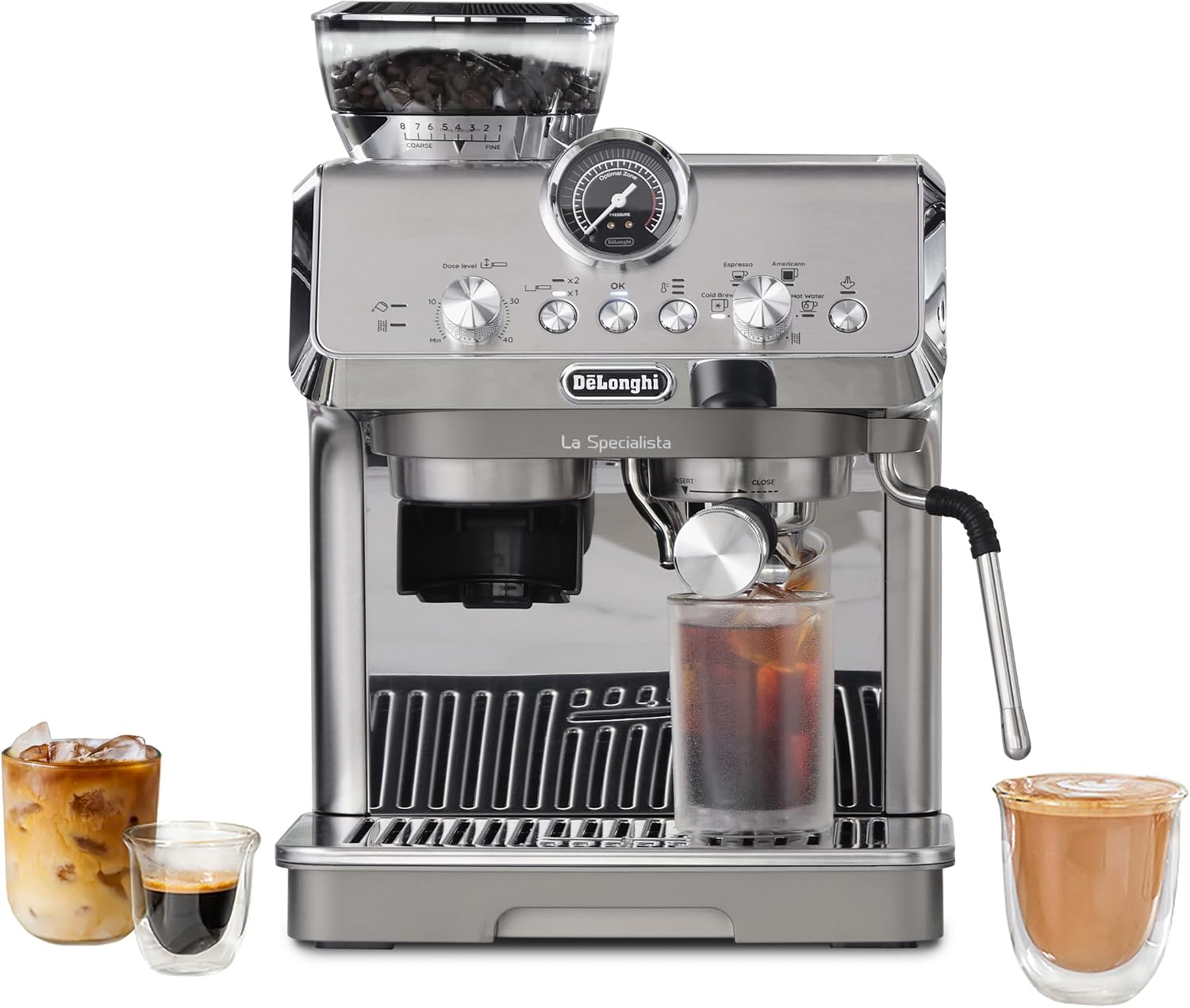
Verdict: the closest thing to a full café setup you'll fit on a home counter, with the price tag to match.
Who it's for: serious home baristas who want an integrated grinder, an automatic milk frother, and preset recipe buttons in one machine, and who are willing to pay for the convenience.
This is a fully loaded machine: a built-in grinder with dose control, a powerful automatic milk frother, and four preset recipe buttons for espresso, americano, and milk drinks, all packaged with a barista toolkit for manual tamping when you want more control. With 930 verified ratings averaging 4.2 stars, it has a smaller sample size than the mass-market Breville and Nespresso options here, but the reviews that exist consistently praise the milk system as noticeably more powerful and consistent than competitors in this price range. It's the priciest machine on this list, and that shows up mainly in build quality and the frother motor rather than the espresso itself.
Pros:
- Integrated grinder with dose control and preset recipe buttons
- Automatic milk frother produces consistently better microfoam than manual wands
- Barista toolkit included for manual tamping and adjustment
Cons:
- Highest price on this list by a meaningful margin
- Smaller review base than the mass-market Breville or Nespresso picks
Who should skip it: if your budget tops out around $500, the Breville Barista Express delivers most of the same core functionality (grinder included) for noticeably less.
Breville Bambino Plus BES500BSS: Best Compact

Verdict: the machine to buy if counter space is the deciding factor, it's a fraction of the footprint of the Barista Express with most of the same shot quality.
Who it's for: apartment dwellers and small kitchens who want a semi-automatic espresso machine with an automatic milk frother, without the bulk of a grinder attached.
The Bambino Plus heats up in about 3 seconds thanks to Breville's ThermoJet system, which is genuinely faster than every other machine on this list, and its automatic steam wand can texture milk for a flat white or cappuccino with the press of a button rather than manual technique. With 2,400 verified ratings averaging 4.1 stars, it's a smaller review base than the Barista Express, and the automatic milk system (while convenient) gives you less fine control than a manual wand once you've built up skill. It's a semi-automatic machine, so you'll need pre-ground coffee or a separate grinder, but the compact stainless steel body is genuinely one of the smallest footprints among machines with a real 15-bar pump.
Pros:
- Heats up in about 3 seconds, fastest on this list
- Automatic milk frother requires zero technique to use
- Compact footprint fits small counters and apartment kitchens
Cons:
- No built-in grinder, requires pre-ground coffee or a separate grinder
- Automatic milk system offers less control than manual wands once you're experienced
Who should skip it: if you want an all-in-one grinder-and-machine setup, the Barista Express above solves that in one unit for a comparable price.
Gaggia Classic Evo Pro: Best for Manual Control

Verdict: the machine for people who actually want to learn espresso as a craft, not just push a button and get a cup.
Who it's for: hands-on brewers who want a commercial-style 58mm portafilter and full manual control over pressure and extraction, and who don't mind a learning curve.
The Classic Evo Pro uses a commercial 58mm portafilter (the same size used in professional café machines) rather than the smaller proprietary baskets found on most consumer machines, which means it's compatible with a huge range of aftermarket accessories like bottomless portafilters and precision baskets. With 3,100 verified ratings averaging 4.4 stars, it has one of the strongest reputations on this list among people who care specifically about manual technique and upgrade potential. The three-way solenoid valve and commercial-grade steam wand put it a level above typical prosumer machines, but there's no automation here at all, every part of the shot, from tamping pressure to extraction timing, is entirely on you.
Pros:
- Commercial 58mm portafilter compatible with a huge aftermarket accessory ecosystem
- Genuine manual steam wand produces café-quality microfoam once mastered
- Solid, all-metal build known for lasting years with basic maintenance
Cons:
- Steep learning curve, no auto-dosing, auto-tamping, or programmable shots
- No built-in grinder, and it demands a quality burr grinder to perform well
Who should skip it: if you want convenience over craft, the Breville Barista Express or Bambino Plus will get you a decent shot with far less technique required.
Nespresso Vertuo Plus Deluxe: Best Pod Machine

Verdict: the pick for people who want genuinely good espresso-style coffee with zero learning curve and almost no cleanup.
Who it's for: anyone who wants a one-button morning routine, doesn't want to grind, dose, or tamp anything, and is fine buying proprietary pods.
The Vertuo Plus uses Nespresso's Centrifusion extraction system, which spins the pod at high speed to extract coffee rather than relying on a traditional tamped puck, and it automatically reads a barcode on each pod to set brew size and time. With 8,400 verified ratings averaging 4.6 stars (the highest rating of any machine on this list) it's clearly the easiest machine here to use well consistently, since there's no technique to master. It comes bundled with the Aeroccino3 milk frother, which handles both hot and cold milk foam at the push of a separate button, rounding out a genuinely low-effort cappuccino and latte setup.
Pros:
- Highest-rated machine on this list (4.6★ across 8,400 reviews)
- Zero learning curve, barcode reading sets brew parameters automatically
- Includes Aeroccino3 frother for hot and cold milk foam
Cons:
- Requires proprietary Nespresso Vertuo pods, an ongoing cost beyond the machine
- Not "real" espresso in the traditional pressure-brewed sense, it's a different extraction method
Who should skip it: if you want to control bean origin, roast, or grind, or you're trying to avoid an ongoing pod subscription cost, any of the bean-based machines above will serve you better long term.
Buying guide: what actually matters in an espresso machine
Pump pressure. Look for a genuine 15-bar (or higher) Italian pump, this is the industry-standard pressure needed to properly extract espresso and produce real crema. Machines marketed as "espresso" without a real pump are usually just strong drip coffee makers.
Grinder integration. A built-in grinder is convenient and saves counter space, but it's also one more mechanical part that can fail, and it's rarely as good as a dedicated standalone burr grinder. If you already own a good grinder, a semi-automatic machine without one (like the Bambino Plus or Casabrews) is usually the better value.
Milk system type. Manual steam wands take practice but give you full control over microfoam texture once mastered; automatic frothers require zero skill but cap out at a slightly less refined foam. Decide based on whether you want to learn the skill or just want consistent results immediately.
Portafilter size and compatibility. Machines using a commercial 58mm portafilter (like the Gaggia Classic Evo Pro) are compatible with a much wider range of aftermarket baskets and accessories than proprietary smaller sizes, which matters if you plan to upgrade your setup over time.
Boiler type. Single-boiler machines need to switch between brewing and steaming temperatures, adding wait time between a shot and frothing milk; dual-boiler or heat-exchanger systems (usually found on pricier machines) let you do both simultaneously.
Maintenance reality. Every espresso machine needs regular descaling and basic cleaning to keep performing well and to avoid mineral buildup that shortens its lifespan, factor this ongoing effort into your decision, not just the upfront price.
Final verdict
If you only want one espresso machine, get the Breville Barista Express BES870XL, it's the most balanced pick here: a built-in grinder, real 15-bar pump, and a review base of 27,800+ verified 4.4-star ratings that no other machine on this list comes close to matching.
If budget is the deciding factor, the Casabrews 3700 Essential delivers a genuine 20-bar Italian pump and a sturdy stainless steel build (backed by 3,600 verified 4.3-star ratings) for a fraction of the price of anything else on this list. It's the easiest recommendation for anyone testing whether home espresso is worth the investment before committing to a pricier machine.
Whichever you choose, freshly ground beans and regular descaling matter more than any single feature, even the best machine underperforms with stale coffee.
Frequently asked questions
What's the difference between a semi-automatic and a super-automatic espresso machine?
Semi-automatic machines (like the Breville Bambino Plus or Gaggia Classic Evo Pro) require you to grind, dose, and tamp coffee yourself, then manually start and stop the shot. Super-automatic machines grind, tamp, and brew at the touch of a button. Semi-automatic gives more control and typically better flavor once you learn the technique; super-automatic prioritizes convenience.
Do I need a separate grinder if my espresso machine doesn't have one built in?
Yes, pre-ground coffee stales within days and produces noticeably worse espresso than freshly ground beans. If your machine (like the Bambino Plus or Casabrews 3700 Essential) doesn't include a grinder, budget for a quality burr grinder as part of the total setup cost.
Is 15 bar or 20 bar pump pressure better for espresso?
Counterintuitively, more pressure isn't better past a point. Professional café machines typically run at 9 bar of actual brewing pressure; 15 or 20 bar pump ratings describe the pump's maximum output, which most machines regulate down to a lower effective brewing pressure. Both 15-bar and 20-bar rated pumps found on this list produce proper espresso, the rating alone isn't the deciding factor.
How often should I descale my espresso machine?
Most manufacturers recommend descaling every 1–3 months depending on water hardness and usage frequency. Hard water areas need more frequent descaling. Skipping this shortens the machine's lifespan and can affect shot temperature and flavor over time.
Are Nespresso pod machines considered real espresso machines?
Nespresso Vertuo machines use a different extraction method (Centrifusion, which spins the pod) rather than traditional pressure-brewed extraction through a tamped puck. The result is espresso-style coffee with real crema, but purists distinguish it from traditional pump-driven espresso. For convenience and consistency, it's a legitimate category of its own.
What's a realistic total budget for a home espresso setup, including a grinder?
If your machine doesn't include a grinder, expect to add $100–200 for a decent entry-level burr grinder on top of the machine price. All-in-one machines like the Breville Barista Express or De'Longhi La Specialista Arte Evo build the grinder cost into the machine price instead.


