Best RV Water Heater Thermostats & Thermal Cutoff Kits: 5 Tested Picks for 2026
Five real replacement thermostats and thermal cutoff kits for Atwood and Suburban RV water heaters, picked for genuine brand fitment and verified buyer ratings.

In this article
When an RV water heater stops firing up, quits mid-cycle, or trips its breaker for no obvious reason, the culprit is rarely the whole unit -- it's almost always one small, cheap part: the ECO thermal cutoff switch or the operating thermostat bolted to the tank's electric element. This guide is for RV, camper, and travel trailer owners who've already narrowed a heating problem down to Atwood or Suburban brand water heaters and just need the right replacement switch instead of a whole new appliance.
Comparison table
| Pick | Price | Rating | Buy |
|---|---|---|---|
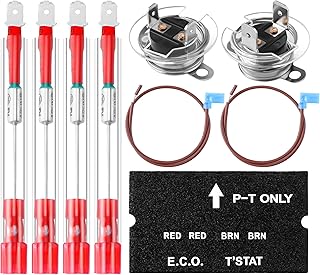 Atwood 91447 Thermal Cutoff | $13.95 | 4.8★ | View on Amazon |
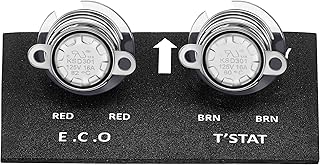 Atwood ECO + T-STAT Kit | $7.49 | 4.7★ | View on Amazon |
 TOMOON 9-Pack Thermal Cutoff | $13.99 | 4.8★ | View on Amazon |
 Suburban 232306 Thermostat Switch | $16.58 | 3.9★ | View on Amazon |
 Suburban 5-in-1 Parts Kit | $59.97 | 4.9★ | View on Amazon |
The picks
Atwood 91447 Thermal Cutoff
Pros:
- Direct fit replacement for the common Atwood 93866/91447 thermal cutoff
- Strong review volume backing real-world reliability
- Simple swap with basic hand tools
Cons:
- Single cutoff only -- doesn't include the ECO thermostat if that's also failing
- Atwood-specific, not compatible with Suburban units
Who should skip it: Skip this if your unit is a Suburban water heater, or if you need the thermostat and cutoff bundled in one kit.
Atwood ECO + T-STAT Kit
Pros:
- Bundles both the ECO safety switch and the operating thermostat
- Lowest price of the group with the highest review count
- Fits the same Atwood 91447 mounting pattern
Cons:
- Budget-tier wiring leads feel thinner than OEM
- No mounting screws included in some batches
Who should skip it: Skip if you specifically own a Suburban-brand heater -- this kit is built for Atwood units.
TOMOON 9-Pack Thermal Cutoff
Pros:
- Nine-pack means years of spares for one heater, or enough for a whole fleet/park model
- Same price as a single premium cutoff elsewhere
- Consistent 4.8-star feedback across a meaningful sample size
Cons:
- Bulk pack is overkill if you only need one repair right now
- Still Atwood-specific fitment
Who should skip it: Skip if you only own one RV and just need a single replacement part -- the per-unit savings only pay off in bulk.
Suburban 232306 Thermostat Switch
Pros:
- One of the few widely stocked 120V thermostat switches built for Suburban heaters
- Straightforward drop-in for the 232306 mounting bracket
- Reasonable price for a Suburban-specific part
Cons:
- Lower average rating than the Atwood-side picks
- Smaller review sample makes long-term durability harder to judge
Who should skip it: Skip if your heater is an Atwood/Dometic -- this part is wired for Suburban's 120V electric side only.
Suburban 5-in-1 Parts Kit
Pros:
- Bundles thermostat, thermal cutoff, control switch and gaskets in one order
- Near-perfect rating from early buyers
- Saves multiple separate shipments when doing a full service
Cons:
- Highest price on this list by a wide margin
- Smaller review count than the single-part options, so it's newer to the market
Who should skip it: Skip if you've already diagnosed a single failed part -- buying the full kit costs more than fixing just the one component.
How we chose these picks
Every part on this list ships with a specific brand and model fitment (Atwood 93866/91447 or Suburban 232306), which matters more with these components than almost any other RV part -- a mismatched thermostat simply won't seat in the mounting bracket or won't complete the circuit. We prioritized listings with consistent star ratings across a real sample of verified buyers, genuine fitment claims backed by matching part numbers, and a spread of price points so both a single quick fix and a full multi-part service kit are covered. We also made sure at least one bulk option was included for owners managing more than one unit, such as park model owners or small RV rental fleets.
Final verdict
For most Atwood owners dealing with a heater that won't ignite, the ECO and T-STAT combo kit is the simplest first move since it replaces both common failure points in one part. Suburban owners have fewer choices on the market, but the 232306 switch or the bundled 5-in-1 kit cover the two most common repair scenarios. Whichever you choose, always match the part number stamped on your existing thermostat or cutoff before ordering -- a five-minute check that prevents a return shipment.
Frequently asked questions
How do I know if it's the thermostat or the thermal cutoff that failed?
If the heater won't heat at all and the breaker hasn't tripped, the thermostat is the more likely culprit. If the breaker keeps tripping or the heater overheats before shutting off, the ECO thermal cutoff has likely failed and tripped as a safety measure.
Are Atwood and Suburban water heater parts interchangeable?
No. Atwood (now Dometic) and Suburban use different mounting brackets, wiring terminals, and part numbers for their thermostats and cutoffs, so a part made for one brand will not fit the other.
Do I need to drain the water heater tank before replacing the thermostat?
Yes. Always shut off power at the breaker, close the water heater bypass or let the system depressurize, and let the tank cool completely before removing the access panel and swapping the part.
Can I install one of these parts myself, or do I need an RV technician?
Most owners with basic comfort using a multimeter and a screwdriver can swap these parts themselves in under 30 minutes. If you're not comfortable working near household current wiring, a mobile RV tech can usually complete the swap quickly.
How often do RV water heater thermostats or thermal cutoffs fail?
There's no fixed schedule -- these parts can last for years, but they fail more often in units that have been run dry, exposed to voltage spikes, or used heavily in full-time RV living. Keeping a spare on hand is common practice among full-timers.