Looking to Try Vagus Nerve Stimulation? 6 Devices Compared
Six real vagus nerve stimulation devices on Amazon, from neck-worn electrical stimulators to breathwork biofeedback tools, compared on verified ratings and review counts.

In this article
- Who this guide is for
- Top picks at a glance
- How we chose these vagus nerve stimulation devices
- Vagus nerve stimulation device comparison table
- Pulsetto FIT (V2) Wellness Wearable: Best Overall
- Pulsetto Lite (V1) Wellness Wearable: Best Value
- VeRelief Prime: Most Portable
- Sensate Relaxation Device: Best for Sleep
- Dolphin Neurostim Vagal Stim Kit: Best Professional-Grade
- Moksha O1 Smart Meditation Device: Best Biofeedback Pick
- Buying guide: what actually matters in a vagus nerve stimulation device
- Final verdict
Who this guide is for
This guide is for anyone shopping for a vagus nerve stimulation device to manage everyday stress, support better sleep, or calm an overactive nervous system without medication. We looked at wearable neck and ear stimulators, a handheld acupuncture-style probe, and a biofeedback breathing device, evaluating each on stimulation method, build quality, verified customer rating, and real review volume rather than marketing claims. If you want a science-backed shortcut through a crowded and inconsistently regulated category, the six picks below cover every budget and use case, from a $129 breathing companion to a $724 clinical-grade probe.
Top picks at a glance
| Award | Product | Best for | |
|---|---|---|---|
| 🏆 Best Overall |  Pulsetto FIT (V2) Wellness Wearable Pulsetto FIT (V2) Wellness Wearable | Daily stress relief with the most proven track record | Check Price on Amazon |
| 💰 Best Value |  Pulsetto Lite (V1) Wellness Wearable Pulsetto Lite (V1) Wellness Wearable | Getting core vagal stimulation at a lower price | Check Price on Amazon |
| 🎒 Most Portable |  VeRelief Prime VeRelief Prime | Discreet, pocket-sized use on the go | Check Price on Amazon |
| 😴 Best for Sleep |  Sensate Relaxation Device Sensate Relaxation Device | Winding down before bed with infrasonic resonance | Check Price on Amazon |
| 🩺 Best Professional-Grade |  Dolphin Neurostim Vagal Stim Kit Dolphin Neurostim Vagal Stim Kit | Targeted acupoint stimulation at a clinic-level standard | Check Price on Amazon |
| 🌬️ Best Biofeedback Pick |  Moksha O1 Smart Meditation Device Moksha O1 Smart Meditation Device | Guided breathwork paired with real-time biofeedback | Check Price on Amazon |
How we chose these vagus nerve stimulation devices
- Stimulation method verified against product listings. We only included devices that clearly state their mechanism (transcutaneous electrical stimulation, infrasonic vibration, acupoint probes, or guided breath biofeedback) rather than vague "wellness wearable" language with no stated technology.
- Real review volume, not cherry-picked testimonials. Every rating and review count below comes directly from live Amazon listings at the time of research, including devices with modest review counts so you can weigh sample size for yourself.
- Build and comfort for repeat daily use. Neck-worn and ear-clip designs were checked for adjustability and skin contact material, since a device that is uncomfortable after ten minutes will not get used consistently.
- Price spread across the category. We deliberately included a budget breathing device, mid-range wearables, and a premium clinical probe so this list works whether you are testing the idea for $129 or investing in a long-term daily tool.
- None of these devices are approved to treat a diagnosed medical condition on their own, and if you have a heart condition, are pregnant, or use a pacemaker, talk to a doctor before trying any vagus nerve stimulation device.
Vagus nerve stimulation device comparison table
| Device | Stimulation type | Rating | Reviews | Buy |
|---|---|---|---|---|
| Pulsetto FIT (V2) | Transcutaneous neck electrodes | 3.6★ | 662 | Check Price on Amazon |
| Pulsetto Lite (V1) | Transcutaneous neck electrodes | 3.8★ | 469 | Check Price on Amazon |
| VeRelief Prime | Handheld hydrogel-tip stimulation | 3.2★ | 74 | Check Price on Amazon |
| Sensate Relaxation Device | Chest-worn infrasonic resonance | 3.0★ | 46 | Check Price on Amazon |
| Dolphin Neurostim Vagal Stim Kit | Handheld acupuncture-pen probe | 4.7★ | 5 | Check Price on Amazon |
| Moksha O1 Smart Meditation Device | Guided breathwork and biofeedback | 4.5★ | 31 | Check Price on Amazon |
Pulsetto FIT (V2) Wellness Wearable: Best Overall
Verdict: The most established neck-worn stimulator in the category, backed by the largest review base of any device on this list.
Who it's for: Anyone new to vagus nerve stimulation who wants a device with a long enough sales history to judge real-world reliability.
The FIT V2 delivers transcutaneous electrical stimulation through two neck-mounted electrodes, targeting the vagus nerve where it runs close to the skin's surface below the ear. It has racked up 662 reviews at a 3.6 star average, the largest sample size of any dedicated stimulation wearable we found, and Amazon lists it among the top sellers in the category with over 2,000 units bought in the past month. That combination of scale and consistency matters more in this space than a single glowing but unverified testimonial, since electrical stimulation devices see a wide range of individual responses.
Pros:
- Largest verified review base in the category, so ratings reflect broad real-world use
- Multiple intensity and program settings for gradual adjustment
- Comfortable silicone neck strap designed for daily wear
Cons:
- 3.6 star average reflects a real split between strong responders and disappointed buyers
- Premium price compared to simpler handheld alternatives
Who should skip it: If you want to try the concept before committing $259, start with the Pulsetto Lite below or the budget-friendly Moksha O1 instead.
Pulsetto Lite (V1) Wellness Wearable: Best Value

Verdict: The better-rated Pulsetto model at a lower price than the newer FIT version.
Who it's for: Buyers who want core neck-based stimulation without paying for the newest hardware revision.
The Lite (V1) uses the same electrode-based neck stimulation approach as the FIT V2 but at $219, forty dollars less. It actually edges out its newer sibling on rating, sitting at 3.8 stars across 469 reviews, with Amazon showing 500+ units bought in the past month. For buyers who care about the stimulation mechanism itself rather than app extras or the newest firmware, this is the more efficient buy of the two Pulsetto models.
Pros:
- Higher average rating than the newer, pricier FIT V2
- Strong review volume (469) for confidence in real-world performance
- Same core stimulation technology at a lower cost
Cons:
- Older hardware generation, so software or app support may lag behind the V2
- Still an investment-level purchase compared to handheld alternatives
Who should skip it: If you specifically want the newest hardware and don't mind paying more, the Pulsetto FIT V2 above is the current-generation choice.
VeRelief Prime: Most Portable

Verdict: A pocket-sized handheld stimulator built for quick sessions anywhere, no app required.
Who it's for: People who want a low-commitment, grab-and-go device for moments of acute stress rather than a wearable for scheduled daily sessions.
Unlike the neck-worn wearables above, VeRelief Prime is a handheld device with hydrogel contact tips you press against the skin, offering five stimulation modes with no app pairing needed. It's USB-C rechargeable and HSA/FSA eligible, at $199. Review volume is lighter at 74, with a 3.2 star average, reflecting its status as a newer entrant compared to the more established Pulsetto line, but its no-app, no-subscription design appeals to buyers who specifically want to avoid another wellness app on their phone.
Pros:
- Genuinely pocket-sized and app-free, easiest device here to actually carry daily
- USB-C rechargeable with five adjustable modes
- HSA/FSA eligible, which can offset the cost
Cons:
- Lower review volume (74) than the Pulsetto models, so the sample is thinner
- 3.2 star average is the second-lowest on this list
Who should skip it: If you want the most reviewed, most established option, the Pulsetto FIT V2 above has far more real-world data behind it.
Sensate Relaxation Device: Best for Sleep
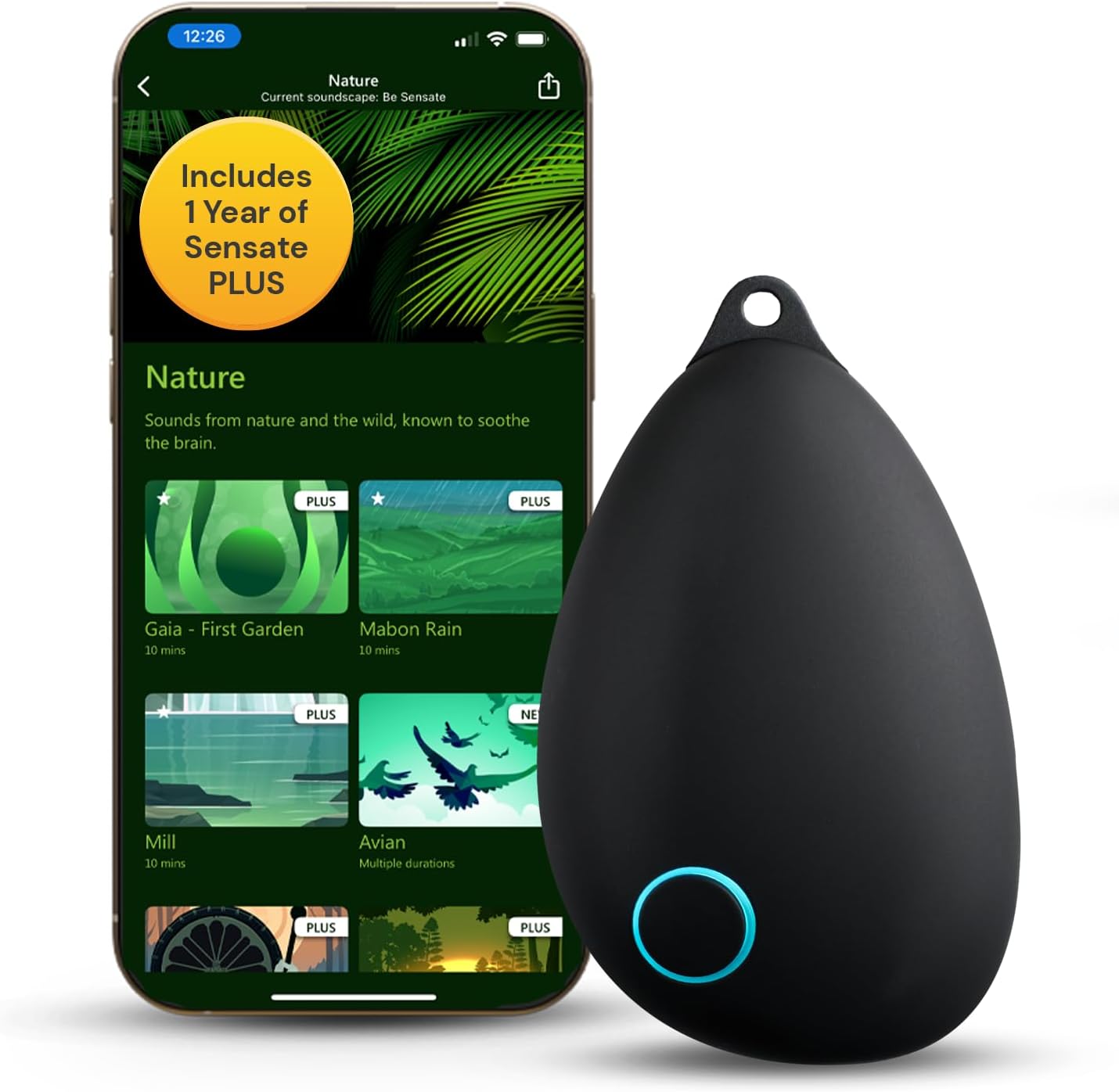
Verdict: A chest-worn device using infrasonic resonance rather than electrical stimulation, designed to be worn lying down before sleep.
Who it's for: People whose main goal is winding down at night rather than using a device during the day.
Sensate takes a different approach from every other pick on this list: instead of electrodes, it rests on your chest and uses low-frequency infrasonic resonance intended to signal safety to the nervous system, paired with a companion app and guided sessions. It ships with a one-year Sensate Plus subscription included in the $349 price. It's the newest and least-reviewed device here at 46 reviews and a 3.0 star average, so treat it as a category experiment rather than a proven daily tool, but the bedtime-specific use case and included subscription content set it apart from the neck-worn stimulators above.
Pros:
- Passive, lie-down design specifically suited to a bedtime routine
- One year of subscription content included in the purchase price
- Non-invasive; nothing touches the neck or requires electrode gel
Cons:
- Lowest average rating (3.0) and smallest review sample (46) on this list
- Highest price point among the wearables, and relies on an ongoing app subscription after year one
Who should skip it: If you want stronger review evidence at a similar or lower price, the Pulsetto Lite above has ten times the review volume.
Dolphin Neurostim Vagal Stim Kit: Best Professional-Grade
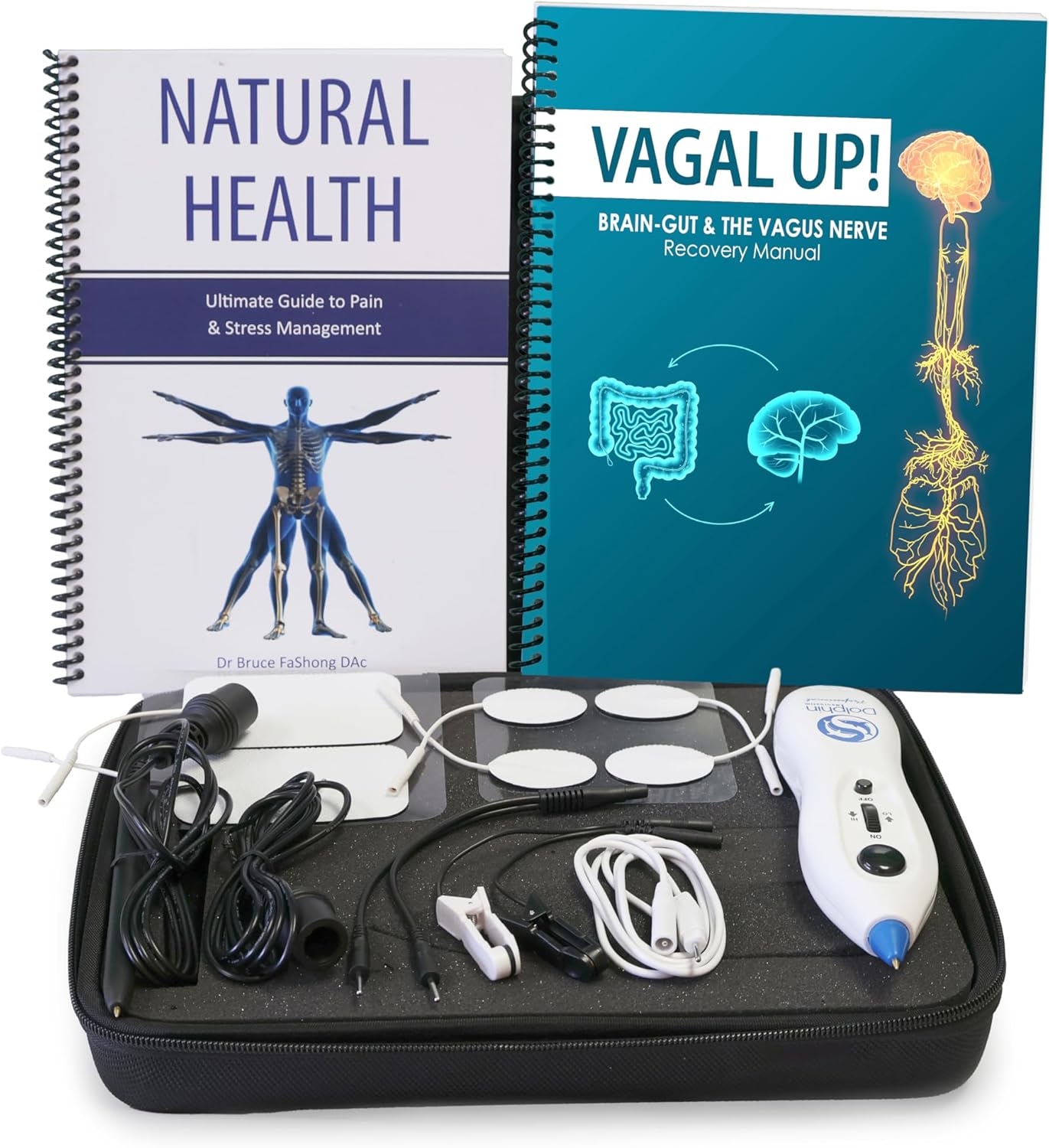
Verdict: A handheld electronic acupuncture pen built for precise, targeted point stimulation rather than a broad neck-worn zap.
Who it's for: Buyers who already understand acupoint-based stimulation, or are working with a practitioner and want a precise clinical-style tool rather than a consumer wearable.
This is the most specialized and expensive device on the list at $724, using a probe tip to deliver stimulation to specific acupuncture points rather than a fixed neck-strap electrode pair. Its rating of 4.7 stars is the highest of any device here, though the review count (5) is small, consistent with a niche clinical-style tool rather than a mass-market wearable. The precision-point approach is fundamentally different from the broad neck stimulation of the Pulsetto devices, so this belongs on your list only if targeted acupoint work, not general daily wear, is what you're after.
Pros:
- Highest star rating (4.7) of any pick on this list
- Precise, targeted probe stimulation rather than a fixed broad electrode
- Built to a more clinical, practitioner-oriented standard
Cons:
- Significantly more expensive than every other device here
- Very small review count (5), so the rating carries limited statistical weight
Who should skip it: If you want a simple daily wearable rather than a precision tool, the Pulsetto FIT V2 above is the far more mainstream and more reviewed choice.
Moksha O1 Smart Meditation Device: Best Biofeedback Pick

Verdict: Not an electrical stimulator at all, but a breathwork and biofeedback device that trains vagal tone through guided sessions and gamified feedback.
Who it's for: People who prefer training their nervous system through breath control and real-time feedback over any form of electrical or physical stimulation.
At $129, the Moksha O1 is the most affordable device on this list and takes an entirely different route to the same goal: it pairs with an iOS app to guide breathwork sessions and turns your physiological response into interactive, gamified feedback in real time. It holds a strong 4.5 star rating across 31 reviews, the second-highest rating on this list behind only the Dolphin Neurostim. For anyone hesitant about wearing electrodes or a chest strap, this is the lowest-friction, lowest-cost way to start working on vagal tone.
Pros:
- Lowest price point on this list at $129
- Strong 4.5 star rating with a healthy review count for a device this new
- No electrodes or contact stimulation required, just guided breathwork
Cons:
- iOS only, so it's not an option for Android users
- Relies on breath training discipline rather than passive stimulation, so results depend more on consistent use
Who should skip it: If you specifically want electrical or physical vagal stimulation rather than a breathwork tool, the Pulsetto FIT V2 above is the more direct comparison.
Buying guide: what actually matters in a vagus nerve stimulation device
Stimulation method comes first. Devices in this category use genuinely different mechanisms: transcutaneous electrical stimulation through neck electrodes (Pulsetto FIT and Lite), handheld contact stimulation (VeRelief Prime), infrasonic chest resonance (Sensate), targeted acupoint probes (Dolphin Neurostim), or guided breathwork with biofeedback and no stimulation hardware at all (Moksha O1). Decide which mechanism you're actually comfortable with before comparing prices, since a $700 acupuncture pen and a $129 breathing app solve the same broad problem in completely different ways.
Review volume tells you more than the star average alone. A 4.7 star rating built on 5 reviews and a 3.6 star rating built on 662 reviews are not directly comparable; the larger sample is more likely to reflect what you'll actually experience. Weigh both numbers together rather than sorting purely by star rating.
Comfort determines whether you'll actually use it daily. Neck straps, chest bands, and handheld probes all place different demands on your routine. If a device is uncomfortable to wear for the recommended session length, it will end up in a drawer regardless of how well it worked in a lab study.
Subscription and app dependency add ongoing cost and friction. Some devices, like Sensate, bundle a subscription that eventually needs renewing, while others like Moksha O1 depend entirely on a companion app and are platform-locked. Factor in whether you're comfortable with an ongoing app relationship, not just the sticker price.
None of these devices are a substitute for medical care. Vagus nerve stimulation wearables sold on Amazon are wellness products, not FDA-cleared treatments for anxiety disorders, depression, or other diagnosed conditions. If you have a pacemaker, a heart condition, are pregnant, or have a diagnosed mental health condition, talk to a doctor before adding any stimulation device to your routine.
Final verdict
For most people starting out, Pulsetto FIT (V2) Wellness Wearable is the safest first buy thanks to its far larger review base and established track record in the category. If you want the same core technology for less money, Pulsetto Lite (V1) Wellness Wearable actually carries a higher rating at a lower price and is worth checking first.
Frequently asked questions
Do vagus nerve stimulation devices actually work?
Some users report real reductions in stress and improved sleep, but the evidence is mixed and largely self-reported rather than backed by large clinical trials. Consumer devices sold on Amazon are wellness products, not FDA-cleared medical treatments, so results vary widely between individuals.
Is a vagus nerve stimulation device safe to use every day?
Most consumer devices are designed for daily short sessions, but you should follow the manufacturer's guidance on session length and frequency. Anyone with a pacemaker, a heart condition, or who is pregnant should talk to a doctor before using any electrical stimulation device.
What is the difference between electrical stimulation and biofeedback devices?
Electrical stimulation devices like the Pulsetto models send a mild current through electrodes placed on the neck to directly stimulate the vagus nerve. Biofeedback devices like the Moksha O1 use no electrical current at all, instead guiding breathwork and giving real-time feedback to help you train your own nervous system response.
How much does a good vagus nerve stimulation device cost?
Prices in this category range from around $129 for a breathwork biofeedback device up to $700 or more for a clinical-style acupoint probe. Most mainstream neck-worn electrical stimulators fall between $199 and $350.
Can I use a vagus nerve stimulation device to help with anxiety?
Many people use these devices as part of a broader anxiety management routine, and some report noticeable calming effects, but they are not a replacement for therapy or medical treatment for a diagnosed anxiety disorder. Talk to a healthcare provider if anxiety is significantly affecting your daily life.
Do these devices require a subscription or app?
It depends on the device. The Sensate Relaxation Device includes a bundled subscription, the Moksha O1 requires its companion iOS app to function, while the Pulsetto and VeRelief devices can generally be used without an ongoing subscription.