Best Water Heater Element Socket Wrenches: 5 Tested Picks for 2026
Five real element socket wrenches that make swapping a burnt-out water heater element a five-minute job instead of a fight.
In this article
- Who this guide is for
- Comparison table
- The picks, reviewed
- Skoutag Dual Hex Element & Anode Rod Wrench
- Timsec 1-1/2" Element Socket, 1/2" Drive
- ascavs 6-Point Element Socket Wrench
- Qtcial 1-1/2" Residential Element Socket
- GLSJA Heavy Duty 27mm & 38mm Socket Set
- How we chose
- Final verdict
Who this guide is for
If your water heater is throwing lukewarm showers or tripping its breaker, the element is a common suspect -- and swapping it yourself can save an easy $150+ service call. The catch is the element nut: it's oversized (usually 1-1/2 in.) and torqued down hard from the factory, so a regular socket set won't grip it cleanly. This guide is for homeowners and RV owners doing a first-time element or anode rod swap who need the right socket, not a stripped nut and a trip back to the hardware store.
Every pick below is a real, currently-listed Amazon product. We compared hex design, drive size, material, and how well each one handles a stubborn, corroded element before it starts rounding off.
Comparison table
| Image | Pick | Price | Rating | Buy |
|---|---|---|---|---|
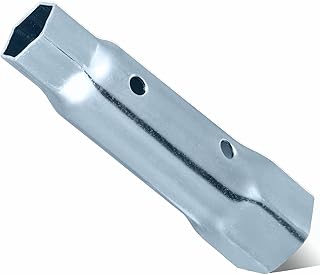 | Skoutag Dual Hex Element & Anode Rod Wrench | $9.99 | 4.5 | View on Amazon |
 | Timsec 1-1/2" Element Socket, 1/2" Drive | $13.99 | 4.6 | View on Amazon |
 | ascavs 6-Point Element Socket Wrench | $9.99 | 4.8 | View on Amazon |
 | Qtcial 1-1/2" Residential Element Socket | $15.99 | 4.7 | View on Amazon |
 | GLSJA Heavy Duty 27mm & 38mm Socket Set | $15.99 | 3.8 | View on Amazon |
The picks, reviewed
Skoutag Dual Hex Element & Anode Rod Wrench
This is the most-bought option in the category and it's easy to see why: the dual-hex head handles both the 1-1/16 in. anode rod and the 1-1/2 in. element on the same tool, which is handy since most tank jobs need both at once.
Pros: Two sizes in one tool, fits standard 1/2 in. drive ratchets, solid grip on lightly corroded nuts. Cons: Chrome plating can wear on very rusted elements over repeated use. Skip it if: you only ever work on one specific element size and don't want the anode-rod end taking up drawer space.
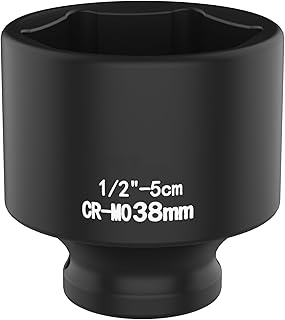
Timsec 1-1/2" Element Socket, 1/2" Drive
A single-purpose 1-1/2 in. socket built specifically for standard residential elements. The deeper socket wall gives more contact surface than generic sockets, which matters when a nut has been torqued down for a decade.
Pros: Purpose-built depth and wall thickness, straightforward 1/2 in. drive fit, good grip on stuck elements. Cons: Single size only -- no anode-rod coverage. Skip it if: you need a socket that also handles anode rods in one tool.
ascavs 6-Point Element Socket Wrench
The 6-point design is the standout here -- it distributes torque across more contact points than a generic hex, which reduces the chance of rounding off an old, corroded nut on the first pass.
Pros: 6-point grip resists rounding, budget price, currently the highest-rated pick in this list. Cons: Smaller sample of reviews so far compared to the more established options. Skip it if: you want a tool with a longer, more established review history before trusting it on a stuck nut.
Qtcial 1-1/2" Residential Element Socket
A well-reviewed, heavier-duty single-size socket. It's a good middle-of-the-road pick if you want something sturdier than the cheapest options without stepping up to a multi-piece set.
Pros: Strong build quality, reliable grip, consistently high ratings across a large number of reviews. Cons: Costs more than comparable single-size sockets. Skip it if: budget is the top priority and you only need the socket for one job.
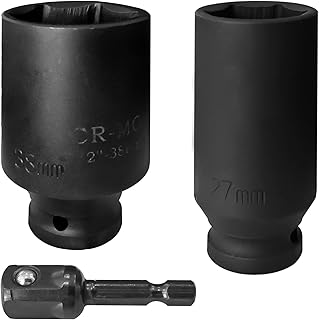
GLSJA Heavy Duty 27mm & 38mm Socket Set
This set covers both 27mm and 38mm (roughly 1-1/16 in. and 1-1/2 in.) sizes, useful if you're not sure which nut size your specific tank uses before you start.
Pros: Two sizes covers most residential and RV tanks, heavy-duty construction. Cons: Lower average rating than the other picks here -- read recent reviews for your exact model before buying. Skip it if: you already know your exact element size and don't need the second socket.
How we chose
We focused on tools built specifically for water heater elements rather than generic deep sockets, since the wall thickness and hex tolerance of a purpose-built socket matter for getting a clean bite on a stuck nut. We weighed current customer ratings, review volume, drive compatibility with standard 1/2 in. ratchets, and whether each listing was for a single size or a multi-size set, since not every tank uses the same nut.
Final verdict
For most residential tanks, the Timsec or Qtcial single-size sockets are the simplest, most reliable choice if you already know you need a 1-1/2 in. socket. If you also need to pull the anode rod at the same time, the Skoutag dual-hex tool saves you from buying two separate tools. If you're not sure what size your tank uses, the GLSJA two-size set removes the guesswork before you start draining the tank.
Whatever you pick, always shut off power (electric) or gas to the heater and let the tank cool before loosening any element.
Frequently asked questions
What size socket do I need for a water heater element?
Most standard residential electric water heater elements use a 1-1/2 in. hex nut, though some models and most RV anode rods use 1-1/16 in. Check your specific tank's manual or measure the nut before buying a socket.
Can I use a regular deep socket instead of a dedicated element wrench?
You can try, but standard sockets often have thinner walls and looser hex tolerances than purpose-built element sockets, which increases the risk of rounding off a corroded nut. A dedicated element socket is cheap insurance against a stripped fitting.
Do I need to drain the tank to replace the element?
Yes, for most residential tanks you need to shut off the water supply and drain the tank at least below the element level before removing it, otherwise water will spray out as soon as the element is loosened.
Why does the element nut always feel stuck?
Elements are torqued down tightly at the factory and can also corrode in place over years of mineral buildup, which is why a snug-fitting, thick-walled socket and steady leverage matter more than brute force.