
Best Aquatic Plants for Garden Ponds (2026)
We compared real Amazon listings for floating, submerged, and marginal pond plants, plus a hardy water lily and plant food, based on verified rating and review data.

In this article
- Who this guide is for
- Top picks at a glance
- How we chose these aquatic plants for garden ponds
- Aquatic pond plants comparison table
- Chalily Water Hyacinth Floating Pond Plants: Best Overall
- Pond Oxygenating Hornwort Bunch Plants: Best Oxygenator
- Live Water Lily Rhizomes (IWGS Award Winner): Best for Blooms
- Perennial Farm Juncus effusus (Soft Rush): Best Marginal Plant
- Imported Anacharis Bunch: Best Budget Pick
- API PondCare Aquatic Plant Food Tablets: Best Plant Food
- Buying guide: what actually matters in aquatic plants for garden ponds
- Final verdict
Who this guide is for
This guide is for anyone setting up or refreshing a garden pond who wants the water clear, the fish healthy, and the whole system balanced without daily maintenance. We evaluated real Amazon listings across every category a working pond actually needs: a floating plant for shade and filtration, a submerged oxygenator for water clarity, a hardy water lily for blooms, a marginal plant for the pond edge, a budget oxygenator, and a plant food to keep everything growing. Each pick below is scored against verified Amazon rating and review data, not marketing copy. If you only have room or budget for one or two additions this season, the comparison table and buying guide further down will tell you exactly which combination covers the most ground.
Top picks at a glance
| Award | Product | Best for | |
|---|---|---|---|
| 🏆 Best Overall |  Chalily Water Hyacinth Floating Pond Plants (3 Count) Chalily Water Hyacinth Floating Pond Plants (3 Count) | Fast shade, filtration, and koi pond cover | Check Price on Amazon |
| 🌊 Best Oxygenator |  Pond Oxygenating Hornwort Bunch Plants Pond Oxygenating Hornwort Bunch Plants | Keeping water clear and oxygenated | Check Price on Amazon |
| 🌸 Best for Blooms |  Live Water Lily Rhizomes (IWGS Award Winner) Live Water Lily Rhizomes (IWGS Award Winner) | Season-long hardy lily flowers | Check Price on Amazon |
| 🌾 Best Marginal Plant |  Perennial Farm Juncus effusus (Soft Rush) Perennial Farm Juncus effusus (Soft Rush) | Natural pond edge and bog filtration | Check Price on Amazon |
| 💰 Best Budget Pick |  Imported Anacharis Bunch Imported Anacharis Bunch | Cheap, fast oxygenation for small ponds | Check Price on Amazon |
| 🌱 Best Plant Food |  API PondCare Aquatic Plant Food Tablets API PondCare Aquatic Plant Food Tablets | Keeping any potted pond plant fed | Check Price on Amazon |
How we chose these aquatic plants for garden ponds
- Verified Amazon review volume: we favored listings with meaningful review counts (hundreds to thousands) over new listings with a handful of ratings, since pond plants are notorious for inconsistent shipping quality and review volume is the best public signal of that.
- Growth role in the pond: we made sure the list covers the three jobs a healthy pond actually needs done (floating shade/filtration, submerged oxygenation, and marginal/edge planting) rather than six variations on the same plant type.
- Cold hardiness and region: where a listing specified hardy versus tropical/annual behavior, we noted it, since a plant that survives winter in one climate is an annual purchase in another.
- Shipping restrictions: floating plants like water hyacinth are restricted or banned in some states as invasive species, so we flagged this directly rather than letting a reader find out at checkout.
- One caveat that applies across every pick here: none of these plants will keep a pond clear on their own without basic maintenance (removing dead foliage, controlling total plant coverage, and not overfeeding fish).
Aquatic pond plants comparison table
| Plant | Role | Rating | Reviews | Pack size | |
|---|---|---|---|---|---|
| Chalily Water Hyacinth | Floating shade + filtration | 4.4★ | 183 | 3 plants | Check Price on Amazon |
| Hornwort Bunch | Submerged oxygenator | 3.7★ | 1,600 | 1 bunch | Check Price on Amazon |
| Water Lily Rhizome | Blooming lily pads | 3.6★ | 2,100 | 1 tuber | Check Price on Amazon |
| Juncus effusus Soft Rush | Marginal/pond edge | 4.3★ | 366 | 1 quart container | Check Price on Amazon |
| Anacharis Bunch | Budget submerged oxygenator | 3.9★ | 448 | 4 to 5 stems | Check Price on Amazon |
| API PondCare Plant Food | Fertilizer for potted plants | 4.4★ | 2,500 | 25 tablets | Check Price on Amazon |
Chalily Water Hyacinth Floating Pond Plants: Best Overall
Verdict: The single best entry point into pond planting, covering shade, filtration, and root cover for fry in one purchase.
Who it's for: Pond owners who want visible results within a week and koi or goldfish keepers who want their fish to have somewhere to hide and spawn.
Water hyacinth (Eichhornia crassipes) is a floating plant that spreads a dense mat of glossy leaves and trailing roots across the surface, and this three-count Chalily listing holds a 4.4-star rating across 183 reviews, among the strongest ratings of any floating pond plant we checked. The roots hang several inches below the surface and act as a natural filter, pulling excess nutrients out of the water that would otherwise feed algae blooms, while the leaf mat provides shade that keeps water temperature and algae growth down through summer. It multiplies quickly in warm weather, so one small order this season can cover a meaningful surface area within a month. Note that water hyacinth is classified as invasive in several states (including Florida and Texas) and cannot be shipped there, so check your local regulations before ordering.
Pros:
- Rapid surface coverage for shade and algae control within weeks
- Root system doubles as a natural filter and fish fry shelter
- Strong, consistent 4.4-star rating across a real review base
Cons:
- Cannot ship to several states due to invasive species restrictions
- Needs manual thinning in warm climates or it will overtake the pond
Who should skip it: If you live somewhere water hyacinth can't legally ship, or you want a plant that stays put without regular thinning, the Juncus effusus soft rush below is a better-behaved marginal alternative.
Pond Oxygenating Hornwort Bunch Plants: Best Oxygenator

Verdict: The most trusted submerged oxygenator on Amazon for pond keepers, backed by 1,600 real reviews.
Who it's for: Anyone dealing with cloudy or green water who wants a fast-growing submerged plant that competes directly with algae for nutrients.
Hornwort is a rootless, fully submerged plant that floats freely or can be anchored near the bottom, and it's one of the fastest oxygen producers available for a garden pond, which is exactly why this listing has accumulated 1,600 reviews at a 3.7-star average, a review count several times larger than most competing oxygenators we checked. It absorbs excess nitrates and phosphates directly from the water column, starving out the algae that feeds on the same nutrients, and it tolerates a wide temperature range so it keeps working through cooler shoulder seasons when other plants slow down. Unlike anchored plants, hornwort needs no soil or planting basket, you simply drop the bunch into the pond and it does the rest. The 3.7-star average reflects some reports of plants arriving wilted in transit, which is a known risk with any live aquatic shipment in hot weather.
Pros:
- Massive, well-established review base at 1,600 reviews for real-world reliability
- No planting required, just place it in the water
- Fast nutrient uptake that directly competes with algae
Cons:
- Occasional wilted or damaged shipments reported, especially in summer heat
- Grows fast enough to need regular thinning to avoid choking the pond
Who should skip it: If you want a plant that also blooms and adds visual interest rather than working purely behind the scenes, the water lily rhizome below is the better pick.
Live Water Lily Rhizomes (IWGS Award Winner): Best for Blooms

Verdict: The most-reviewed hardy water lily on Amazon, and an award-winning cultivar to boot.
Who it's for: Anyone who wants their pond to actually flower, not just stay clear, and who is willing to plant a rhizome in a submerged pot rather than just dropping it in the water.
This is a pre-grown hardy lily rhizome from a Top 4 IWGS (International Waterlily and Water Gardening Society) award-winning line, and with 2,100 reviews it is the single most-reviewed water lily listing we found in this category, giving a reader more real feedback to evaluate than almost any competing product. Hardy water lilies (as opposed to tropical varieties) survive winter dormancy in most US zones as long as the rhizome sits below the pond's freeze line, and they return year after year once established, unlike tropical lilies that need to be treated as annuals or overwintered indoors. The pads themselves provide shade coverage similar to floating plants, while the flowers open daily through the warm season. The 3.6-star average is pulled down mostly by reviews describing rhizomes that arrived already sprouting or slightly dried out, a known risk with any bareroot aquatic shipment.
Pros:
- Award-winning IWGS cultivar line with the largest review base in the category
- Hardy and perennial in most US zones, no annual repurchase needed
- Pads add shade coverage in addition to the blooms
Cons:
- Requires a submerged planting basket and aquatic soil, more setup than floating plants
- Some reviews note dried-out or already-sprouting rhizomes on arrival
Who should skip it: If you want results the same week without any planting setup, the Chalily water hyacinth above gives faster, simpler coverage.
Perennial Farm Juncus effusus (Soft Rush): Best Marginal Plant

Verdict: The strongest-rated marginal plant we checked, and one that stays exactly where you plant it.
Who it's for: Pond owners who want natural-looking edge planting and biological filtration at the pond's shallow shelf without any risk of it taking over open water.
Soft rush is a marginal plant, meaning it's planted in shallow water or wet soil at the pond edge rather than floating or fully submerged, and this listing carries a strong 4.3-star rating across 366 reviews, one of the higher combined rating-and-volume scores among marginal plants we compared. Its upright green stems root into a shallow planting shelf or bog area and filter runoff before it reaches the main pond, while also softening the hard edge where liner meets water, a common aesthetic complaint with new pond builds. It's deer resistant and cold hardy across most US growing zones, so it comes back reliably each spring once established. Unlike floating plants, it stays contained to where you plant it, which makes it a lower-maintenance long-term choice for the pond edge.
Pros:
- Strongest rating (4.3 stars) among marginal plants in this comparison
- Naturally deer resistant and cold hardy, low ongoing maintenance
- Stays contained to its planting spot instead of spreading across the pond
Cons:
- Ships in a standard nursery container, not bareroot, so setup takes more effort than floating plants
- Not an oxygenator or algae control plant on its own
Who should skip it: If your main problem is cloudy water rather than a bare pond edge, the hornwort bunch above will do more for water clarity.
Imported Anacharis Bunch: Best Budget Pick
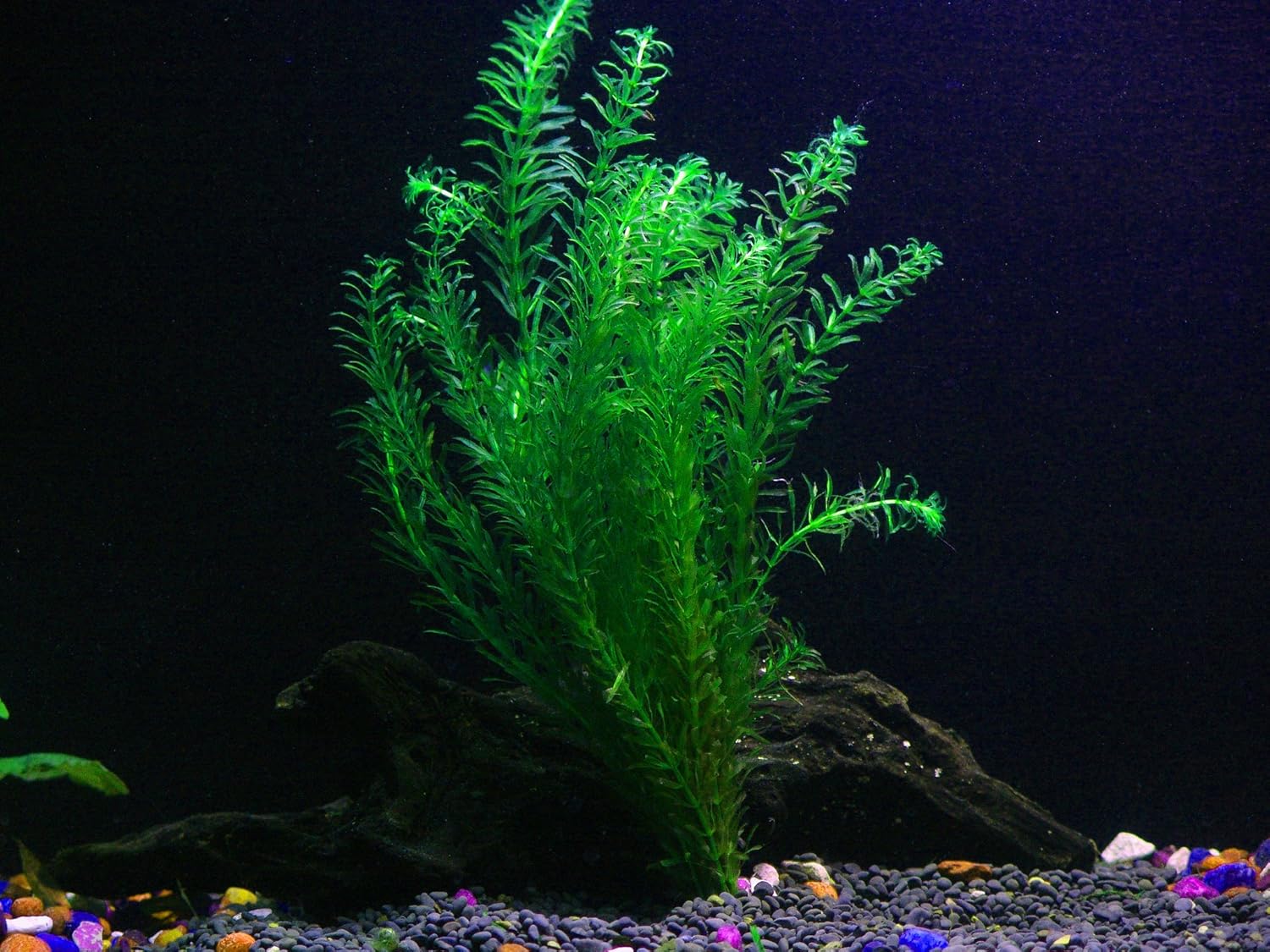
Verdict: The cheapest reliable oxygenator on this list, with a solid review base to back it up.
Who it's for: Anyone with a small pond, a container water garden, or a tight budget who just wants a proven oxygenating plant without paying for extras.
Anacharis (Egeria densa) is a classic submerged oxygenating plant that's been a staple of pond and aquarium keeping for decades, and this listing holds a 3.9-star rating across 448 reviews at one of the lowest price points in this entire roundup. Like hornwort, it needs no soil or basket, and its dense stems provide the same nutrient competition against algae along with cover for fish fry. It grows quickly in full sun and can be trimmed and replanted from cuttings, so a single bunch this season can be propagated into meaningful coverage without another purchase. It's a beginner-tropical plant, meaning it's easy to keep alive but is not reliably cold hardy in most climates, so treat it as a warm-season addition rather than a permanent perennial.
Pros:
- Lowest price per bunch of any plant in this comparison
- Proven, well-reviewed oxygenator with decades of use in ponds
- Can be trimmed and replanted from cuttings to multiply coverage for free
Cons:
- Not reliably cold hardy, likely an annual purchase in most US climates
- Smaller bunch size than some competing oxygenator listings
Who should skip it: If you want a plant that survives winter and comes back on its own, the hornwort bunch above tolerates a wider temperature range for similar money.
API PondCare Aquatic Plant Food Tablets: Best Plant Food

Verdict: The most-reviewed pond plant fertilizer on Amazon, and the easiest way to keep every potted plant on this list actually blooming.
Who it's for: Anyone who has planted (or is about to plant) potted marginals or water lilies and wants them to bloom reliably instead of just surviving.
None of the floating or submerged plants above need feeding since they pull nutrients directly from the water, but potted plants like water lilies and marginals in aquatic soil benefit significantly from a dedicated slow-release fertilizer, and this API PondCare listing is the most-reviewed option we found in the category at 2,500 reviews with a 4.4-star average. The tablets are pushed directly into the planting soil near the root zone, where they release nutrients slowly over several weeks rather than dumping fertilizer into the open water where it would just feed algae instead of your plants. It's formulated to be safe for fish and other pond wildlife when used as directed, an important distinction from general garden fertilizer, which can be toxic to fish in a closed pond system. A 25-tablet pack covers several feeding cycles for a handful of potted plants across a full season.
Pros:
- Largest verified review base of any pond plant fertilizer we compared (2,500 reviews)
- Root-zone tablets feed plants directly instead of the open water, reducing algae risk
- Formulated to be fish-safe when used as directed
Cons:
- Only benefits potted plants, does nothing for floating or fully submerged species
- Requires reapplication every few weeks during the growing season
Who should skip it: If your pond is entirely floating and submerged plants with no potted lilies or marginals, you can skip fertilizer altogether and put that budget toward the water hyacinth or hornwort above instead.
Buying guide: what actually matters in aquatic plants for garden ponds
Balance floating, submerged, and marginal plants rather than buying six of one type. A healthy pond ecosystem needs all three roles covered: floating plants for shade and surface filtration, submerged plants for oxygenation and algae competition, and marginal plants for edge filtration and a natural transition from land to water. Buying only one category leaves gaps that algae will fill.
Check your hardiness zone before choosing between tropical and hardy varieties. Tropical plants like water hyacinth and anacharis are typically annuals outside of warm climates, and true hardy plants like most water lilies survive winter dormancy as long as the roots stay below the pond's freeze line. Knowing which category a plant falls into before you buy avoids the surprise of losing it over winter.
Confirm your state allows the plant you're ordering. Several popular floating species, water hyacinth included, are classified as invasive in specific states and cannot legally ship there. This is listed on the product page but easy to miss, so check it against your state before ordering.
Don't over-plant a small pond. As a general rule, aim for roughly 50 to 70 percent surface coverage from floating and lily pads at full growth, leaving open water for fish and oxygen exchange. A pond fully carpeted in plants can actually deplete oxygen overnight when photosynthesis stops.
Feed potted plants, not the open water. Loose fertilizer dumped into open pond water feeds algae as readily as it feeds your plants. Root-zone tablets pushed into a potted plant's soil deliver nutrients where they're actually used, which is the safer and more effective approach for any potted marginal or water lily.
Verified review volume matters more than star rating alone for live plants. Live aquatic plants are shipped, and shipping quality varies more than the plant genetics do. A listing with 2,000 reviews at 3.7 stars has weathered far more real-world shipping conditions than a new listing with five reviews at 5 stars, and tells you more about what to actually expect.
Final verdict
For most garden ponds, Chalily Water Hyacinth Floating Pond Plants is the best starting point: it delivers visible shade, filtration, and fish cover within weeks and carries the strongest combined rating in this roundup. If your main issue is cloudy or green water rather than bare surface coverage, Pond Oxygenating Hornwort Bunch Plants is the better first purchase, backed by the largest review base of any oxygenator here and a track record that spans thousands of real pond setups.
Frequently asked questions
What plants do I need for a healthy garden pond?
A balanced pond benefits from three types of plants: floating plants for shade and surface filtration, submerged oxygenators for water clarity, and marginal plants at the pond edge for natural filtration. Covering all three roles keeps algae in check without relying purely on mechanical filtration.
Is water hyacinth legal to buy in every state?
No. Water hyacinth is classified as an invasive species in several states, including Florida and Texas, and sellers cannot legally ship it there. Check your state regulations before ordering, and consider a marginal plant like soft rush as an alternative if you are in a restricted state.
How much of my pond surface should be covered in plants?
Aim for roughly 50 to 70 percent surface coverage from floating plants and lily pads at full growth. This leaves enough open water for fish and gas exchange. A pond that is fully carpeted in plants can deplete oxygen levels overnight once photosynthesis stops.
Do I need to fertilize pond plants?
Only potted plants like water lilies and marginals need fertilizer, since floating and submerged plants pull nutrients directly from the water. Use root-zone fertilizer tablets pushed into the potting soil rather than loose fertilizer in the open water, since loose fertilizer feeds algae just as easily as it feeds your plants.
Are hardy water lilies the same as tropical water lilies?
No. Hardy water lilies survive winter dormancy in most US growing zones as long as the rhizome sits below the pond freeze line, and they return every year. Tropical water lilies need to be treated as annuals or brought indoors for winter in most climates.
Why did my live pond plant arrive wilted or damaged?
Live aquatic plants are sensitive to shipping conditions, especially heat during transit, and some wilting or minor damage is a known risk across nearly every listing in this category. Choosing a listing with a large, verified review count gives a more realistic picture of typical shipping quality than star rating alone.


