Feeling Burned Out? 6 Books for Stress Relief Worth Reading (2026)
The best books for stress relief in 2026, from science-backed burnout guides to CBT workbooks, picked using real Amazon ratings and review data.
In this article
- Who this guide is for
- Top picks at a glance
- How we chose these books for stress relief
- Stress relief books comparison table
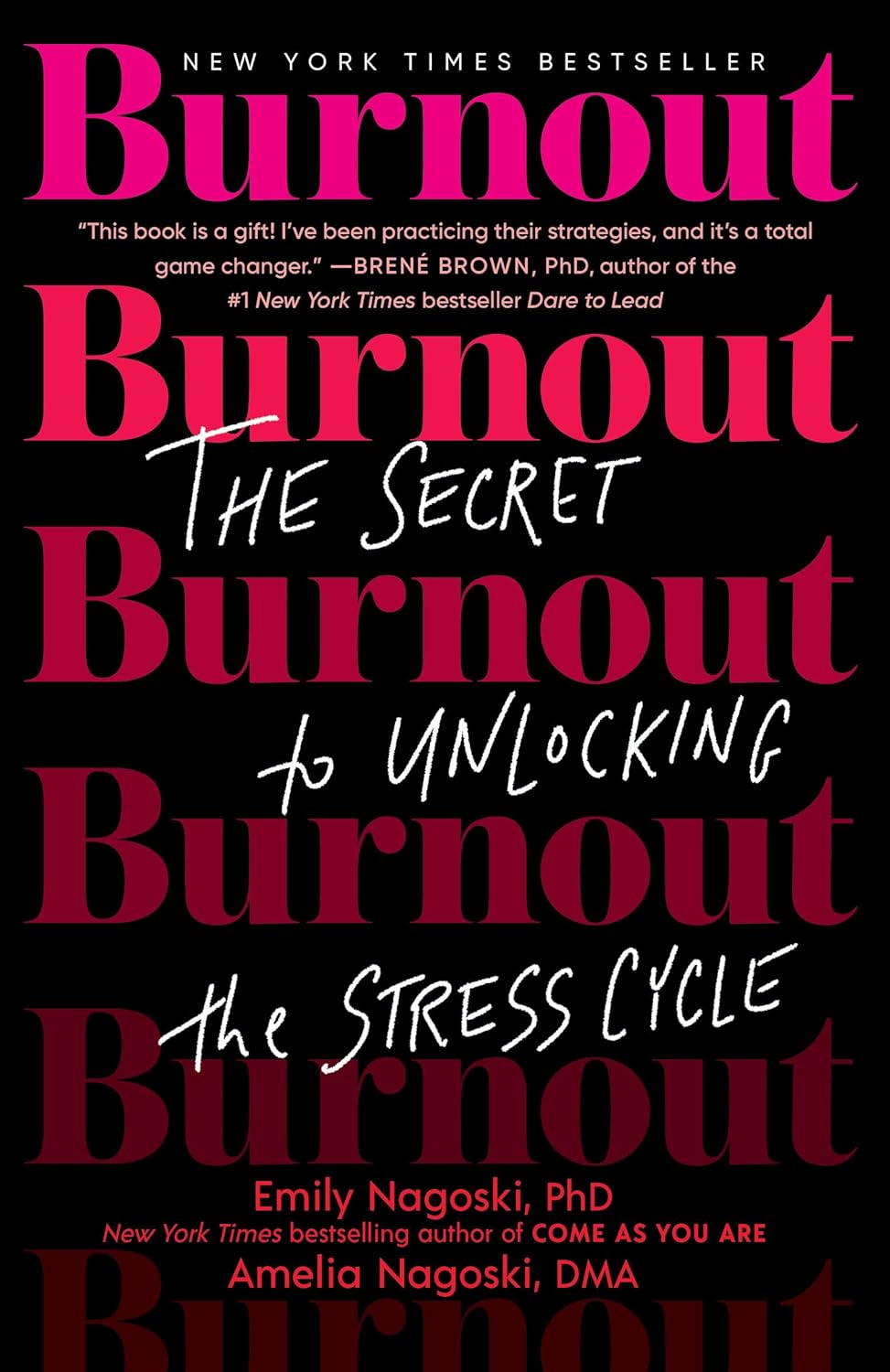
- Burnout: The Secret to Unlocking the Stress Cycle: Best Overall
- Why Zebras Don't Get Ulcers, Third Edition: Best Science-Based Deep Dive
- 10% Happier 10th Anniversary: Best for Skeptics
- Full Catastrophe Living (Revised Edition): Best Mindfulness-Based Program
- The Relaxation and Stress Reduction Workbook: Best Workbook
- The Anxiety and Worry Workbook: Best for Anxiety-Driven Stress
- Buying guide: what actually matters in a stress relief book
- Final verdict
Who this guide is for
This guide is for anyone searching for the best books for stress relief because willpower alone isn't cutting it anymore: the overwhelmed parent, the burned-out professional, the chronic overthinker who has tried breathing apps and needs something with more substance. We evaluated each pick on the credibility of its author (clinical psychologists, stress researchers, working journalists who tested the methods themselves), the specificity of its techniques (not vague affirmations), and real verified review volume and rating on Amazon as social proof. Some of these are narrative science books that explain why stress gets stuck in your body; others are structured workbooks you actively fill in. A few are built specifically for anxiety-flavored stress rather than general burnout, so match the pick to your actual problem rather than just grabbing the top seller.
Top picks at a glance
| Award | Product | Best for | |
|---|---|---|---|
| 🏆 Best Overall |  Burnout: The Secret to Unlocking the Stress Cycle Burnout: The Secret to Unlocking the Stress Cycle | Anyone stuck in chronic stress mode who wants a science-backed "how do I actually finish the stress cycle" answer | Check Price on Amazon |
| 🔬 Best Science-Based Deep Dive |  Why Zebras Don't Get Ulcers, Third Edition Why Zebras Don't Get Ulcers, Third Edition | Readers who want the full biology of how stress hormones damage the body long-term | Check Price on Amazon |
| 😌 Best for Skeptics |  10% Happier 10th Anniversary 10% Happier 10th Anniversary | People who roll their eyes at "meditation" but want less stress without the woo | Check Price on Amazon |
| 🧘 Best Mindfulness-Based Program |  Full Catastrophe Living (Revised Edition) Full Catastrophe Living (Revised Edition) | Readers dealing with stress tied to chronic pain or illness who want the original MBSR curriculum | Check Price on Amazon |
| ✍️ Best Workbook |  The Relaxation and Stress Reduction Workbook The Relaxation and Stress Reduction Workbook | Hands-on learners who want exercises to fill in, not just a book to read | Check Price on Amazon |
| 🎯 Best for Anxiety-Driven Stress |  The Anxiety and Worry Workbook The Anxiety and Worry Workbook | Readers whose stress is really rumination and worry loops, not workload | Check Price on Amazon |
How we chose these books for stress relief
- Author credibility: every pick is written by a clinical psychologist, stress researcher, neuroendocrinologist, or a journalist who spent years reporting directly on the science of stress, not a generic wellness influencer.
- Technique specificity: we favored books that teach a concrete, repeatable method (completing the stress response cycle, progressive muscle relaxation scripts, cognitive reframing worksheets) over books that just describe the problem.
- Verified review volume and rating: we pulled real Amazon review counts and star ratings for each title rather than relying on marketing copy, since a book with thousands of independent ratings is harder to fake than a handful of curated blurbs.
- Format fit: we made sure the list includes both narrative reads (for people who want to understand the "why") and workbooks (for people who want structured daily practice), since stress relief isn't one-size-fits-all.
- No book on this list replaces therapy or medication for clinical anxiety or depression; think of these as tools that work alongside, not a substitute for, professional care when stress becomes unmanageable.
Stress relief books comparison table
| Book | Best technique | Rating | Reviews | Format | |
|---|---|---|---|---|---|
| Burnout | Completing the stress response cycle | 4.6★ | 9,000 | Paperback/ebook | Check Price on Amazon |
| Why Zebras Don't Get Ulcers | Understanding chronic stress physiology | 4.6★ | 3,400 | Paperback/ebook | Check Price on Amazon |
| 10% Happier | Skeptic-friendly meditation onboarding | 4.5★ | 20,800 | Paperback/ebook/audio | Check Price on Amazon |
| Full Catastrophe Living | 8-week MBSR mindfulness program | 4.6★ | 3,400 | Paperback/ebook | Check Price on Amazon |
| Relaxation & Stress Reduction Workbook | Guided relaxation and journaling exercises | 4.6★ | 1,200 | Paperback workbook | Check Price on Amazon |
| Anxiety and Worry Workbook | CBT worksheets for worry loops | 4.6★ | 3,300 | Paperback workbook | Check Price on Amazon |
Burnout: The Secret to Unlocking the Stress Cycle: Best Overall
Verdict: the clearest, most actionable explanation of why "relaxing" doesn't actually relieve stress, and what does.
Who it's for: anyone who feels perpetually wired, exhausted, and unable to switch off even after the stressful event is over.
Written by twin sisters Emily Nagoski (sex educator and researcher) and Amelia Nagoski (choral conductor and burnout survivor), this book's central idea is that stress and stressors are two different things, and dealing with the stressor (finishing the work project, resolving the conflict) doesn't automatically discharge the physiological stress response still running in your body. The authors lay out concrete "completing the cycle" strategies (physical movement, deep breathing, affection, creative expression) backed by citations to real psychophysiology research. With roughly 9,000 verified Amazon reviews and a 4.6-star average, it has become one of the most consistently recommended books on burnout for a reason: it treats stress as a body problem, not just a mindset problem.
Pros:
- Explains the stress cycle in plain language without dumbing down the science
- Short, specific action list you can start using the same day
- Speaks directly to caregiver and working-parent burnout, an underserved niche in this category
Cons:
- Lighter on citations/footnotes than a pure academic text like Sapolsky's
- Some repetition across chapters if you read it cover to cover in one sitting
Who should skip it: if you want the underlying neuroscience and endocrinology in full depth rather than the practical summary, go with Why Zebras Don't Get Ulcers instead.
Why Zebras Don't Get Ulcers, Third Edition: Best Science-Based Deep Dive

Verdict: the definitive, research-dense explanation of how chronic stress physically wears down the body.
Who it's for: readers who want the full biological "why" behind stress-related disease, written by a leading stress researcher rather than a self-help author.
Robert Sapolsky is a Stanford neuroendocrinologist who has spent decades studying stress hormones in primates, and this book is the result: a rigorous but genuinely readable walk through how cortisol and the sympathetic nervous system, useful for short bursts of danger, become destructive when triggered chronically by modern life (deadlines, traffic, relationship conflict). It covers the stress-disease link across the cardiovascular, digestive, immune, and reproductive systems, and closes with practical coping strategies grounded in that research. It holds a 4.6-star rating across roughly 3,400 verified reviews, and it's widely assigned in psychology and public health courses precisely because it treats the reader as capable of understanding real science.
Pros:
- Written by an actual stress researcher, not a wellness commentator
- Explains the specific disease mechanisms (ulcers, hypertension, immune suppression) in detail
- Frequently updated across editions with current research
Cons:
- Denser and longer than most books on this list, closer to a textbook in places
- Coping strategies arrive late in the book after a lot of biology; impatient readers may want to skip ahead
Who should skip it: if you want a quick, action-first read rather than a deep science dive, Burnout is the faster path to the same underlying ideas.
10% Happier 10th Anniversary: Best for Skeptics

Verdict: the most disarming, funniest on-ramp to meditation for people who think mindfulness is nonsense.
Who it's for: high-achieving skeptics, especially anyone in a stressful, competitive career who dismisses meditation as soft or unscientific.
Dan Harris was a network news anchor who had a panic attack live on national television, and this memoir traces how that event pushed him, reluctantly, toward meditation. What makes it work as a stress relief book is the tone: Harris is openly cynical about the self-help industry and calls out its excesses even as he documents what actually reduced his own anxiety and reactivity. It's less a how-to manual and more a persuasive case, paired with concrete starter techniques, for why even a skeptical, ambitious person benefits from ten minutes of daily practice. With around 20,800 verified reviews and a 4.5-star rating, it's the single most reviewed book on this list, reflecting how many stressed, skeptical readers it has actually converted.
Pros:
- Genuinely funny and self-deprecating, easier to finish than a dry self-help book
- Written from lived experience of acute, public stress and panic
- Great gateway before committing to a full workbook or structured program
Cons:
- Lighter on concrete daily exercises than the workbooks on this list
- Memoir framing means more personal narrative and less direct instruction
Who should skip it: if you want structured daily exercises rather than a narrative, go with The Relaxation and Stress Reduction Workbook instead.
Full Catastrophe Living (Revised Edition): Best Mindfulness-Based Program

Verdict: the original, most clinically established mindfulness-based stress reduction program in book form.
Who it's for: readers managing stress that's tangled up with chronic pain, illness, or a serious health diagnosis, not just workplace pressure.
Jon Kabat-Zinn created the Mindfulness-Based Stress Reduction (MBSR) program at the University of Massachusetts Medical School, and this book is essentially that clinical program translated into a guided, structured 8-week course you can run yourself. It includes body scan meditations, gentle yoga sequences, and sitting practices, along with the research base showing measurable reductions in stress hormones and pain perception among program participants. It holds a 4.6-star rating from roughly 3,400 verified reviews. Because it was originally developed for hospital patients managing serious chronic conditions, it takes stress and pain more seriously (and more slowly) than most general-audience self-help books.
Pros:
- Backed by decades of clinical research and hospital-based outcomes
- Structured 8-week format gives you a clear program to follow, not just ideas
- Particularly strong for stress connected to chronic illness or pain, an underserved use case
Cons:
- Denser and slower-paced than a typical self-help book; expect to spend real weeks working through it
- Some readers find the tone more clinical/academic than warm
Who should skip it: if your stress has no physical health component and you just want a fast readable framework, 10% Happier is a lighter entry point.
The Relaxation and Stress Reduction Workbook: Best Workbook

Verdict: the most practical, fill-in-the-blank option if reading about stress relief isn't enough and you need to actively practice it.
Who it's for: hands-on learners who want scripted relaxation exercises and tracking sheets rather than another book to passively read.
This workbook, now in its 8th edition, has been a staple recommendation from therapists for decades because it doesn't just describe relaxation techniques, it walks you through them step by step: progressive muscle relaxation scripts, autogenic training, breathing retraining, visualization, and worksheets to track what's actually reducing your stress week to week. Instead of one author's philosophy, it compiles the most evidence-backed relaxation methods from clinical psychology into a single practical reference. It carries a 4.6-star rating from roughly 1,200 verified reviews, a strong number for a workbook format that typically gets fewer reviews than mainstream nonfiction.
Pros:
- Genuinely hands-on: scripts and exercises you do, not just read
- Covers multiple techniques so you can find what actually works for you
- Frequently recommended by therapists as a between-session tool
Cons:
- Workbook format requires more active time investment than a narrative read
- Less engaging prose since it's structured as a clinical reference, not a story
Who should skip it: if your stress is really anxious rumination and worry rather than general tension, The Anxiety and Worry Workbook targets that more precisely.
The Anxiety and Worry Workbook: Best for Anxiety-Driven Stress

Verdict: the sharpest tool on this list for stress that's actually anxiety and compulsive worrying in disguise.
Who it's for: readers whose stress shows up as racing thoughts, catastrophizing, or an inability to stop worrying about things outside their control.
Written by David A. Clark and Aaron T. Beck (the psychiatrist who founded cognitive behavioral therapy), this workbook applies clinical CBT techniques specifically to chronic worry rather than stress in general. It teaches readers to identify worry triggers, challenge the distorted thinking patterns that fuel them, and replace them with structured, evidence-based responses through guided worksheets. Because it's rooted directly in Beck's original CBT framework rather than a looser wellness philosophy, it tends to work especially well for readers whose stress is cognitive (looping thoughts) rather than purely physical (tension, fatigue). It holds a 4.6-star rating from roughly 3,300 verified reviews.
Pros:
- Built on the actual clinical framework Beck used to found CBT
- Highly specific to worry and rumination, not generic stress advice
- Structured worksheets make progress measurable over time
Cons:
- Higher price point than most books on this list
- Narrower focus means it's less useful if your stress is more physical/burnout than anxious rumination
Who should skip it: if your stress is workload and burnout rather than anxious worrying, Burnout is the better-fit starting point.
Buying guide: what actually matters in a stress relief book
Match the format to how you actually learn. Narrative science books (Burnout, Why Zebras Don't Get Ulcers, 10% Happier) work well if you process information by understanding the "why" first. Structured workbooks (The Relaxation and Stress Reduction Workbook, The Anxiety and Worry Workbook) work better if you need scripted exercises and tracking sheets to actually change behavior, since reading about a technique and practicing it are very different things.
Identify whether your stress is physical, cognitive, or both. Stress that shows up as tension, exhaustion, and inability to switch off responds well to body-based approaches like progressive muscle relaxation and the "completing the cycle" model. Stress that shows up as looping worried thoughts responds better to CBT-based worksheets that target the thinking pattern directly, not just the physical symptom.
Check whether the author has clinical or research credentials. Every book on this list is written by a psychologist, physician-researcher, or a journalist reporting directly from clinical sources, not a lifestyle influencer repackaging generic advice. That distinction matters because stress-relief techniques that sound similar on the surface can have very different evidence bases behind them.
Consider whether your stress is tied to a physical health condition. If chronic pain, illness, or a diagnosis is part of your stress picture, a clinically structured program like Full Catastrophe Living, originally built for hospital patients, will likely serve you better than a general audience self-help book.
None of these books replace professional support for clinical anxiety, depression, or trauma. They're genuinely useful tools for everyday and chronic stress, but persistent, severe symptoms deserve a conversation with a licensed therapist or physician alongside anything you read here.
Final verdict
For most readers, Burnout: The Secret to Unlocking the Stress Cycle is the strongest starting point: it's fast to read, backed by real research, and gives you techniques you can use the same day you finish a chapter. If your stress is really anxious rumination rather than general burnout, The Anxiety and Worry Workbook is the more precise, clinically grounded tool for that specific problem.
Frequently asked questions
What is the best book for stress relief overall?
Burnout: The Secret to Unlocking the Stress Cycle by Emily and Amelia Nagoski is our top overall pick. It explains why finishing a stressful task does not automatically calm your body down, and gives concrete techniques to actually complete the stress response cycle.
Should I read a stress relief book or use a workbook instead?
It depends on how you learn. Narrative books like Burnout or 10% Happier are great if you want to understand the science first. Workbooks like The Relaxation and Stress Reduction Workbook or The Anxiety and Worry Workbook are better if you want structured, fill-in exercises to actively practice.
Can a book actually help with chronic stress or burnout?
Yes, evidence-based books written by clinical psychologists and stress researchers can teach real, testable techniques such as progressive muscle relaxation, cognitive reframing, and mindfulness-based stress reduction that have measurable effects on stress hormones and self-reported wellbeing.
What book is best if my stress feels more like anxiety and worrying?
The Anxiety and Worry Workbook by David A. Clark and Aaron T. Beck is built specifically for anxious rumination and worry loops using cognitive behavioral therapy techniques, rather than general stress or burnout.
Do I need a therapist if I already have a stress relief book?
A good stress relief book is a genuinely useful tool for everyday and chronic stress, but it is not a replacement for professional care. If your stress, anxiety, or worry is severe or persistent, talk to a licensed therapist or physician alongside anything you read.
What is Full Catastrophe Living and who is it for?
Full Catastrophe Living by Jon Kabat-Zinn is the book version of the original Mindfulness-Based Stress Reduction (MBSR) program developed at UMass Medical School. It is especially useful if your stress is connected to chronic pain, illness, or a health diagnosis.