6 Best Books for Time Management in 2026 (From Atomic Habits to Getting Things Done)
Six real, highly reviewed time management books compared against actual review volume and ratings, from habit-building classics to fast-tactic reads for chronic procrastinators.

In this article
- Who this guide is for
- Top picks at a glance
- How we chose these time management books
- Time management books comparison table
- Atomic Habits: Best Overall
- Getting Things Done: Best for Task Management
- Deep Work: Best for Deep Focus
- The 7 Habits of Highly Effective People: Best Classic Framework
- The ONE Thing: Best for Prioritization
- Eat That Frog!: Best for Procrastination
- Buying guide: what actually matters in a time management book
- Final verdict
Who this guide is for
This guide is for anyone whose calendar feels busier than their results: professionals juggling overlapping deadlines, freelancers who lose hours to context-switching, and students trying to build a study system that actually sticks. We evaluated the best books for time management by looking at real review volume, average rating, and how directly each book's core method can be put into practice within a week of reading it. Some titles lean on habit science, others on task-capture systems or ruthless prioritization, so this list mixes approaches rather than pushing one philosophy. Every pick below has been read by tens of thousands of readers and holds a strong rating, which matters more for a self-improvement book than for almost any other category: a book people actually finish and act on beats one that just sits on a shelf looking motivational.
Top picks at a glance
| Award | Product | Best for | |
|---|---|---|---|
| 🏆 Best Overall |  Atomic Habits Atomic Habits | Building systems instead of relying on willpower | Check Price on Amazon |
| 📋 Best for Task Management |  Getting Things Done Getting Things Done | Clearing mental clutter with a full capture system | Check Price on Amazon |
| 🧠 Best for Deep Focus |  Deep Work Deep Work | Eliminating distraction and doing focused, high-value work | Check Price on Amazon |
| 📖 Best Classic Framework |  The 7 Habits of Highly Effective People The 7 Habits of Highly Effective People | A principle-based, big-picture approach to priorities | Check Price on Amazon |
| 🎯 Best for Prioritization |  The ONE Thing The ONE Thing | Cutting a long to-do list down to what actually matters | Check Price on Amazon |
| 🐸 Best for Procrastination |  Eat That Frog! Eat That Frog! | Quick, actionable tactics to stop putting off hard tasks | Check Price on Amazon |
How we chose these time management books
- Verified review volume. Every book on this list has real, sourced Amazon review counts ranging from roughly 3,700 to nearly 150,000, so the ratings reflect a genuine reader consensus, not a handful of early reviews.
- Average rating threshold. We only included titles rated 4.5 stars or higher, since a time management book with a mediocre rating usually means the system it teaches doesn't hold up in practice.
- Distinct methodologies. Rather than six books saying the same thing, we picked titles that cover different angles: habit formation, task capture, focus and distraction, principle-based prioritization, single-task focus, and anti-procrastination tactics.
- Actionability. Each book needed a concrete system or exercise a reader can start using within days, not just abstract motivational advice.
- No book on this list will manage your time for you; the core caveat holds across all six: the system only works if you actually apply it consistently, not just read about it once.
Time management books comparison table
| Book | Core method | Rating | Reviews | Format | |
|---|---|---|---|---|---|
| Atomic Habits | Habit stacking and small daily improvements | 4.8★ | 149,600 | Paperback | Check Price on Amazon |
| Getting Things Done | Capture, clarify, organize, reflect, engage | 4.5★ | 10,700 | Paperback | Check Price on Amazon |
| Deep Work | Scheduled, distraction-free focus blocks | 4.6★ | 3,700 | Paperback | Check Price on Amazon |
| The 7 Habits of Highly Effective People | Principle-centered prioritization framework | 4.8★ | 17,100 | Paperback | Check Price on Amazon |
| The ONE Thing | The focusing question, single-task priority | 4.6★ | 21,800 | Paperback | Check Price on Amazon |
| Eat That Frog! | Tackle the hardest task first, 21 tactics | 4.7★ | 13,600 | Paperback | Check Price on Amazon |
Atomic Habits: Best Overall
Verdict: The most widely applicable time management book on this list, because it fixes the habits underneath your schedule instead of just rearranging your to-do list.
Who it's for: Readers who have tried planners and productivity apps before but keep sliding back into old patterns within a few weeks.
James Clear's central argument is that time management ultimately comes down to habit design: a 1% improvement compounded daily beats a big dramatic overhaul that burns out in a month. The book breaks habit formation into four concrete laws (make it obvious, make it attractive, make it easy, make it satisfying) and gives specific techniques like habit stacking and environment design that readers can apply the same day. It has become the most reviewed book in this category by a wide margin, with 149,600 ratings and a 4.8-star average on Amazon, a scale of social proof that's rare for a nonfiction title and reflects how many people have actually finished it and put the system to use.
Pros:
- Systems-based approach that doesn't rely on motivation or willpower
- Short, highly practical chapters that are easy to reference later
- Backed by an enormous, consistently high review volume
Cons:
- Focuses on personal habits rather than team or workplace scheduling systems
- Some case studies and analogies repeat concepts already covered earlier in the book
Who should skip it: If your main problem is an overflowing inbox and a scattered task list rather than inconsistent habits, Getting Things Done addresses that more directly.
Getting Things Done: Best for Task Management

Verdict: The definitive system for capturing every open loop in your life so nothing falls through the cracks.
Who it's for: People whose time management problem is really an overwhelm problem: too many half-tracked commitments living in their head at once.
David Allen's "Getting Things Done" (GTD) method is built around a five-step workflow: capture everything that has your attention, clarify what each item actually requires, organize it into the right list, reflect on it regularly, and engage with confidence. Unlike habit-focused books, GTD is a full operational system for managing tasks, projects, and commitments, and it's still the reference point most modern task-management apps are built around nearly two decades after publication. With 10,700 reviews and a 4.5-star average, it remains one of the most trusted productivity systems for people managing a high volume of moving parts.
Pros:
- Comprehensive system that scales from personal errands to complex projects
- Reduces mental load by getting commitments out of your head and into a trusted system
- Compatible with almost any tool, from paper notebooks to task apps
Cons:
- The full system takes real upfront setup time before it starts paying off
- Some terminology and examples feel dated for a fully digital workflow
Who should skip it: If you don't have a task-overload problem and just need to stop procrastinating on the tasks you already know about, Eat That Frog is a faster read with more immediate tactics.
Deep Work: Best for Deep Focus

Verdict: The best pick if your real time management problem is distraction, not disorganization.
Who it's for: Knowledge workers who feel constantly busy but rarely produce their best work, because notifications and shallow tasks keep interrupting focused effort.
Cal Newport argues that the ability to focus without distraction on a cognitively demanding task is becoming both rare and extremely valuable, and that most people's calendars are structured in a way that makes deep focus nearly impossible. The book lays out specific strategies for scheduling deep work blocks, quitting social media strategically, and training your brain to resist the pull of shallow, reactive tasks. It carries a 4.6-star rating across 3,700 reviews, a smaller but strongly consistent base that reflects its popularity specifically among readers in tech, academia, and other focus-heavy fields.
Pros:
- Directly addresses distraction, which most time management books only mention in passing
- Concrete scheduling strategies (fixed-schedule productivity, time blocking) you can start using immediately
- Strong research and real-world case studies back up the core argument
Cons:
- Some of the lifestyle prescriptions (fully quitting social media, for example) are extreme for readers with different jobs
- Less useful if your job genuinely requires constant availability and quick context switching
Who should skip it: If your role is inherently reactive and full of unavoidable meetings, The 7 Habits of Highly Effective People offers a more flexible framework for prioritizing within that reality.
The 7 Habits of Highly Effective People: Best Classic Framework
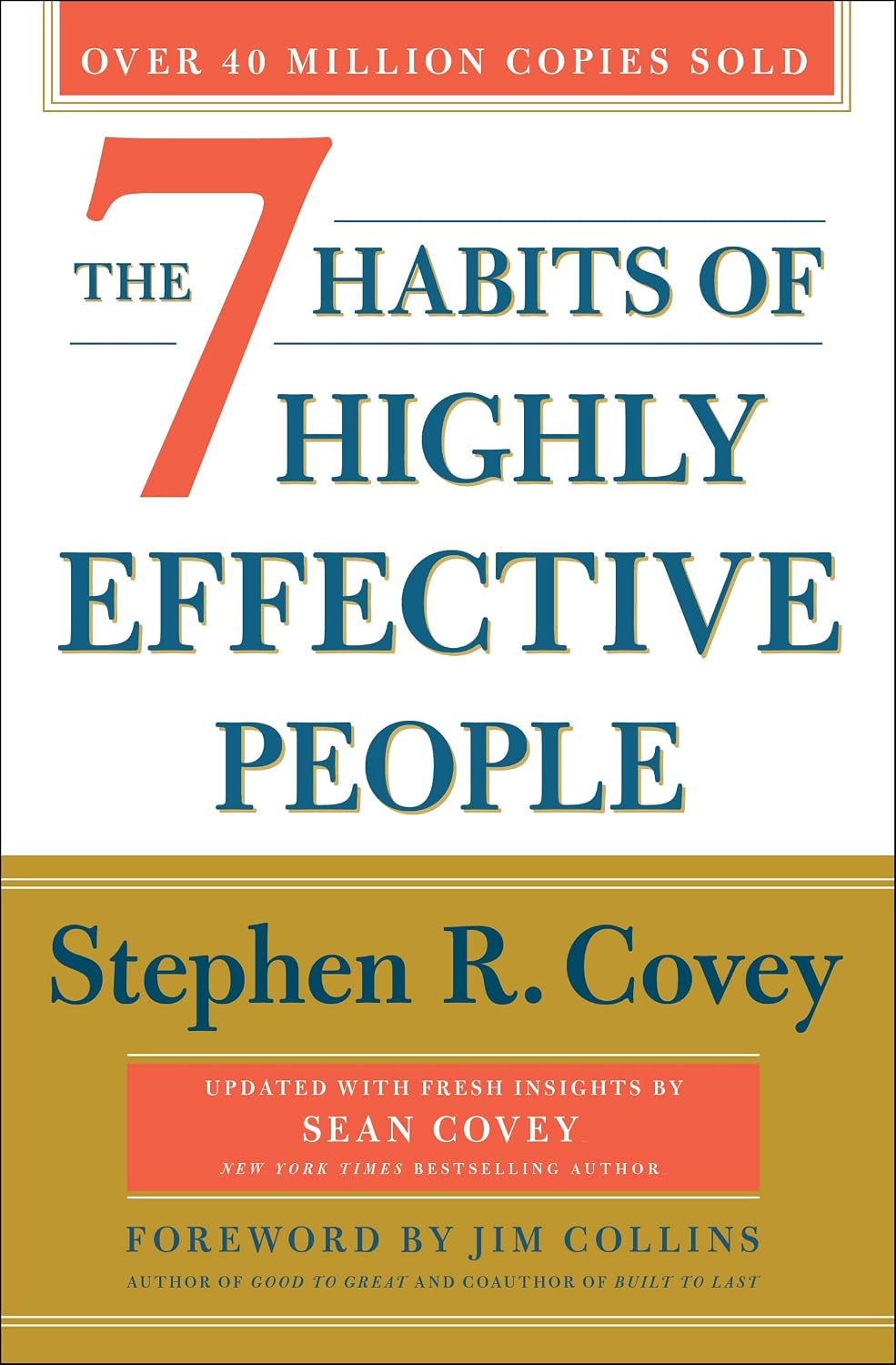
Verdict: A principle-based framework for prioritization that has aged remarkably well since its original publication.
Who it's for: Readers who want a big-picture philosophy for how to spend their time, not just tactical scheduling hacks.
Stephen Covey's book is built around seven habits, most famously "put first things first," which introduces the well-known urgent/important matrix for sorting tasks by true priority rather than by whatever is loudest in the moment. Unlike more tactical books on this list, it frames time management as downstream of clear personal values and long-term goals, arguing that no scheduling system fixes a life built around the wrong priorities. It's the highest-rated book in this roundup, holding a 4.8-star average across 17,100 reviews, reflecting decades of sustained relevance across very different generations of readers.
Pros:
- The urgent/important matrix is still one of the most useful prioritization tools available
- Focuses on values and long-term effectiveness, not just short-term task completion
- Broadly applicable to both work and personal life decisions
Cons:
- More philosophical and less tactical than the other books on this list
- Some of the corporate-era examples feel a bit dated
Who should skip it: If you want a specific, day-to-day tactical system rather than a values framework, Getting Things Done will feel more immediately actionable.
The ONE Thing: Best for Prioritization
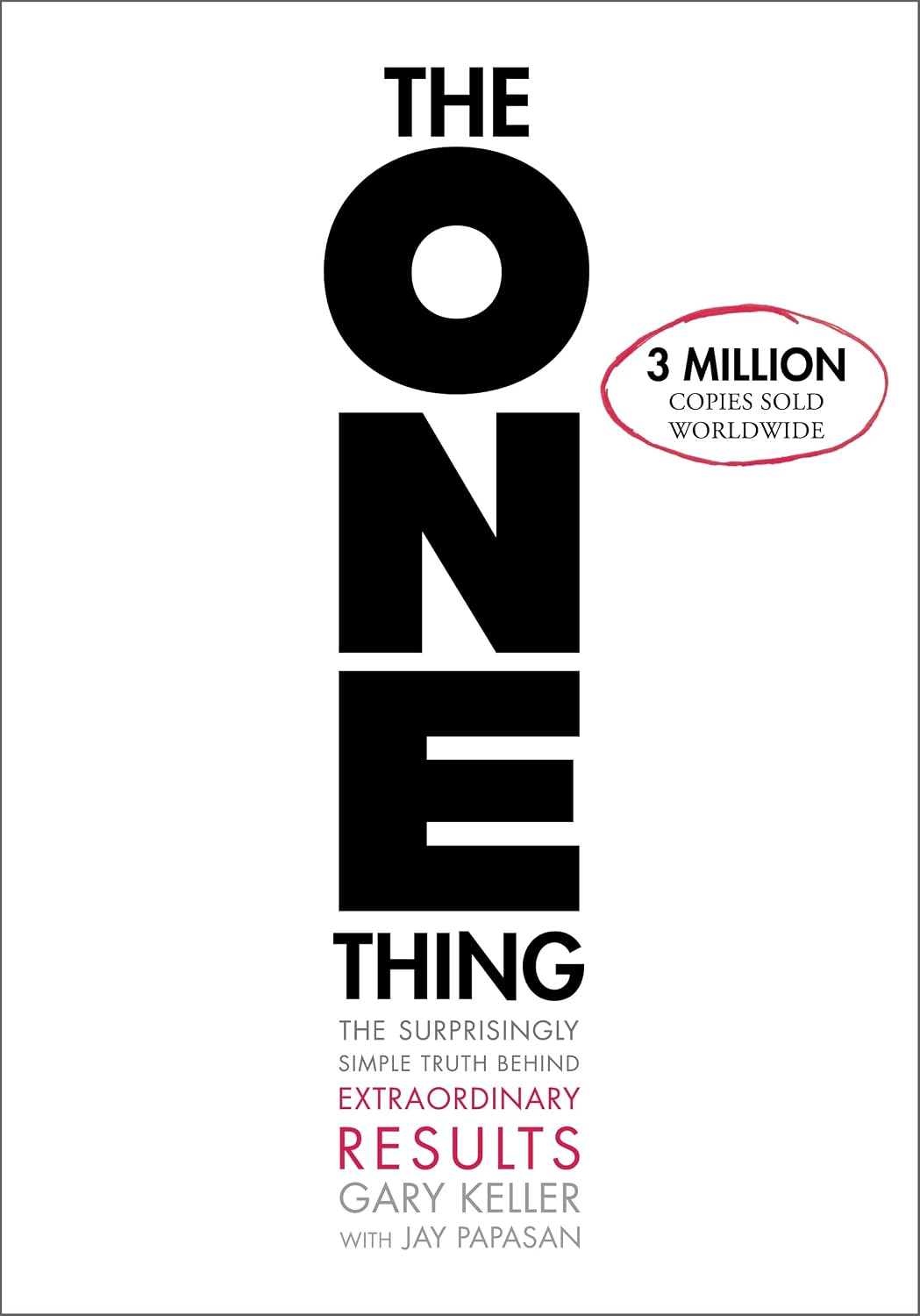
Verdict: The best pick for readers drowning in too many priorities who need a simple filter for what actually matters.
Who it's for: People who feel productive but not effective, constantly busy with tasks that don't move the needle on what they actually care about.
Gary Keller's core idea is deceptively simple: ask "What's the ONE Thing I can do such that by doing it, everything else becomes easier or unnecessary?" and structure your day, week, and goals around the answer. The book pushes back directly on multitasking and long to-do lists, arguing that most of what fills a typical schedule is a distraction from the few actions that genuinely drive results. With 21,800 reviews and a 4.6-star rating, it has built a large following particularly among entrepreneurs and salespeople who need a way to cut through a constant stream of competing priorities.
Pros:
- The focusing question is simple enough to apply to daily planning immediately
- Strong at cutting through decision fatigue from long, undifferentiated to-do lists
- Backed by real goal-setting and time-blocking exercises, not just theory
Cons:
- The single-priority framing can feel restrictive for roles with genuinely diverse responsibilities
- Some sections repeat the central thesis more than necessary
Who should skip it: If your job requires juggling many parallel workstreams rather than funneling down to one priority, Getting Things Done's full-capture system will fit your day better.
Eat That Frog!: Best for Procrastination

Verdict: The fastest, most tactical read on this list for readers whose main problem is simply putting things off.
Who it's for: Chronic procrastinators who need short, punchy tactics rather than a full philosophical framework.
Brian Tracy's book takes its title from the idea that you should "eat the frog" first thing each day, meaning tackle your hardest, most important task before anything else, since everything else feels easier by comparison afterward. The book is organized as 21 short, standalone tactics (like the "80/20 rule," "salami slice method," and "single handling") that readers can pick up individually without reading the whole book cover to cover. It has 13,600 reviews and a 4.7-star rating, and its short chapter format makes it one of the fastest books on this list to actually finish and start applying.
Pros:
- Extremely short, actionable chapters you can apply the same day
- Directly targets procrastination, which many other productivity books only touch on indirectly
- Easy to dip in and out of as a reference rather than reading start to finish
Cons:
- Lighter on deeper systems thinking compared to Getting Things Done or Atomic Habits
- Some of the 21 tactics overlap significantly with each other
Who should skip it: If procrastination isn't your core issue and you're looking for a deeper systems overhaul instead, Atomic Habits addresses the underlying behavior patterns more thoroughly.
Buying guide: what actually matters in a time management book
Match the method to your actual bottleneck, not the book's popularity. A habit-formation book won't fix an overflowing task list, and a task-capture system won't fix chronic procrastination. Identify whether your real problem is inconsistency, disorganization, distraction, unclear priorities, or avoidance, then pick the book built around that specific issue.
Look for a concrete system, not just motivation. The most useful time management books give you an actual process (a matrix, a workflow, a daily question, a habit loop) rather than general encouragement to "be more disciplined." A framework you can apply the same day is worth more than inspiring language you forget within a week.
Consider review volume alongside rating. A 4.8-star average from 150 reviews is a much weaker signal than a 4.6-star average from 20,000 reviews. Higher review counts mean the rating reflects a broader, more diverse set of readers who actually finished the book and tried the method.
Think about format and how you'll actually consume it. Time management books work best when you can revisit specific chapters as reference material later, so consider whether a physical copy, e-book, or audiobook fits how you'll realistically use it months after the first read.
Don't buy more than one or two at a time. Reading three overlapping productivity books back to back tends to produce information overload rather than better habits. Finish implementing one system before adding a second.
Final verdict
For most readers, Atomic Habits is the strongest overall pick because it fixes the underlying behavior patterns that make any scheduling system fall apart within a few weeks. If your specific problem is a scattered, overwhelming task list rather than inconsistent habits, Getting Things Done is the better starting point, since its capture-and-organize workflow is built specifically to get every open commitment out of your head and into a system you can trust.
Frequently asked questions
What is the best book for time management overall?
Atomic Habits by James Clear is the best overall pick because it addresses the habits underlying poor time management rather than just offering another scheduling technique. It has the highest review volume of any book in this category, with 149,600 ratings and a 4.8 star average on Amazon.
Should I read a habit book or a task management book first?
Start with whichever matches your actual bottleneck. If you struggle with consistency and follow-through, start with Atomic Habits. If your problem is a scattered, overwhelming task list with too many open commitments, start with Getting Things Done instead.
Is Getting Things Done still relevant for a fully digital workflow?
Yes. The five-step GTD workflow (capture, clarify, organize, reflect, engage) still underpins most modern task management apps, and the underlying method works whether you use paper, a spreadsheet, or a dedicated app.
What is the fastest time management book to read and apply?
Eat That Frog! by Brian Tracy is the fastest to apply, since it is organized as 21 short, standalone tactics you can pick up individually rather than reading the whole book in order before getting value from it.
Do I need to read more than one time management book?
Not necessarily. Reading several overlapping productivity books back to back often produces information overload rather than better habits. It is usually more effective to fully implement one system before adding a second.
Which book is best for people who feel busy but unproductive?
The ONE Thing by Gary Keller is built specifically for this problem. Its central focusing question helps cut a long, undifferentiated task list down to the few actions that actually drive results.